Our CRO team studies how people use your website, identifies friction, builds evidence-based hypotheses, and tests improvements that can increase enquiries, purchases, bookings, sign-ups, or other valuable actions. FiliCode combines analytics, user experience research, testing, technical implementation, and commercial thinking to improve website conversion without relying on guesswork.
Request A CRO ReviewConversion rate optimisation, commonly called CRO, is the structured process of improving a digital experience so a greater proportion of visitors complete a desired action. The work can involve analytics, funnel analysis, usability research, landing page optimisation, A/B testing, form improvements, checkout optimisation, messaging changes, and technical fixes.
CRO is not simply changing button colours or copying another website. Useful optimisation starts by identifying where users struggle, deciding which problems matter most, and validating improvements through evidence and controlled testing where traffic levels allow.
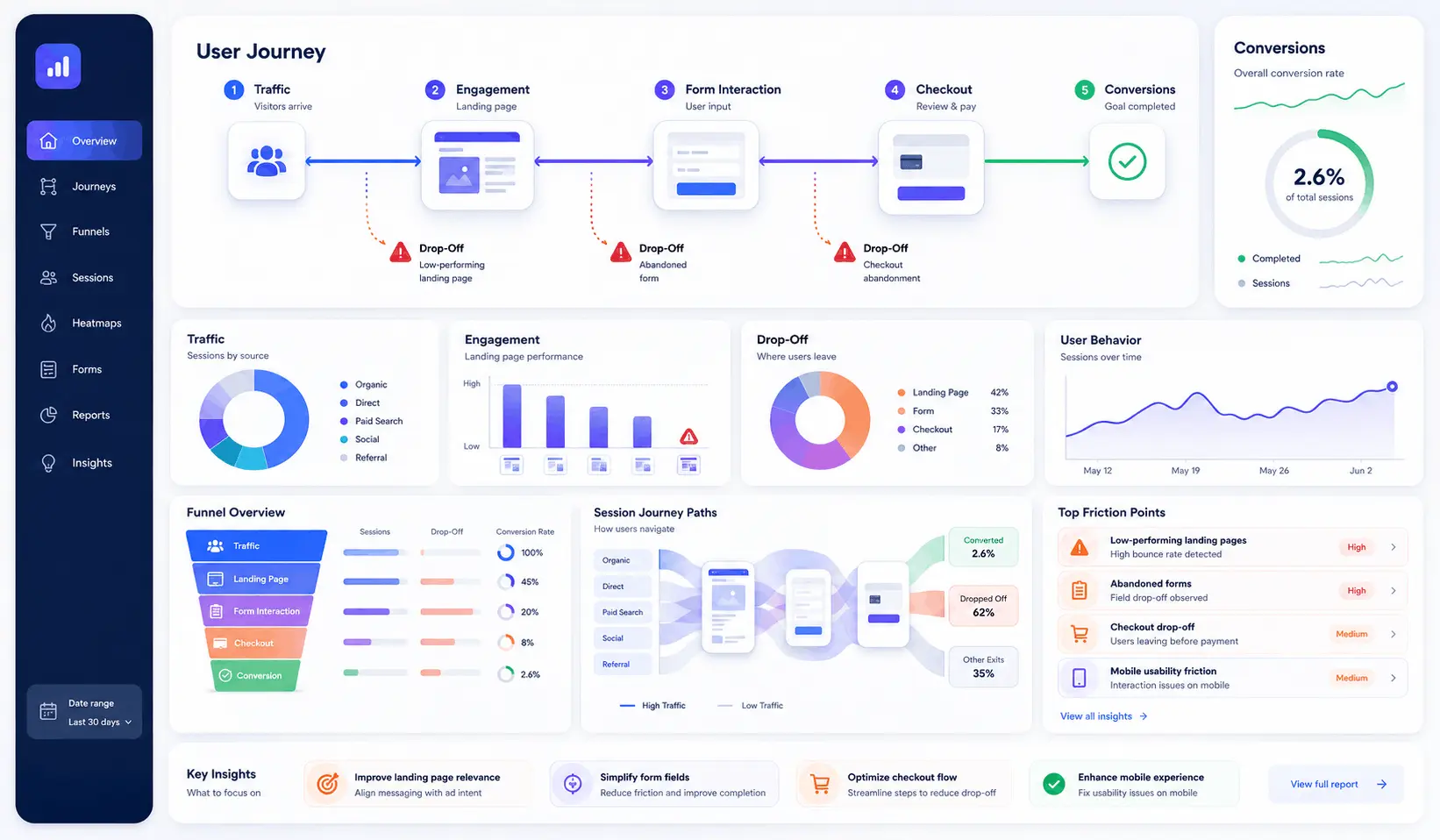
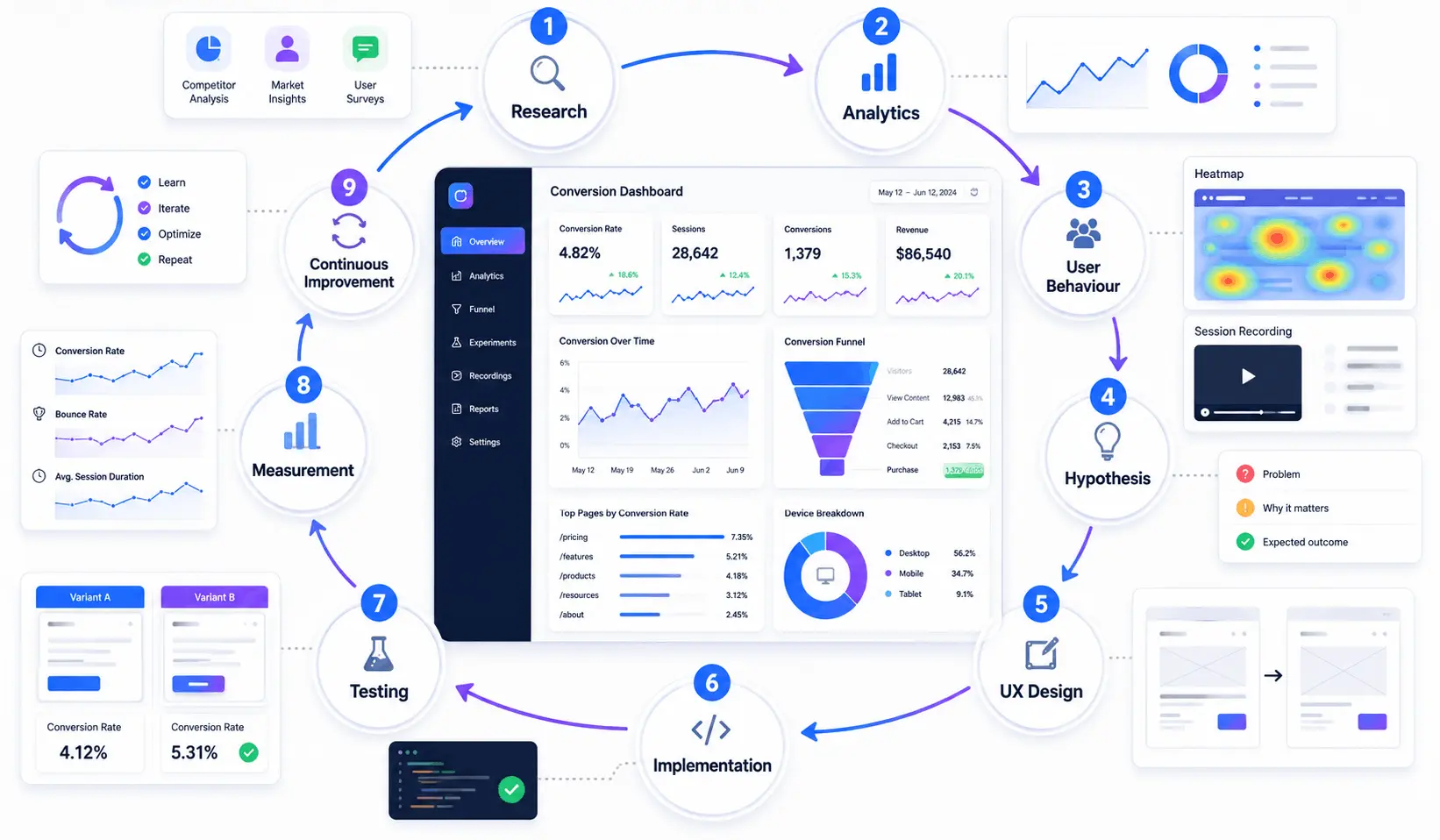
Identify confusing pages, weak messages, abandonment points, usability problems, and technical barriers.
Use analytics, heat maps, session recordings, funnel data, and customer feedback to understand real user behaviour.
Prioritise meaningful hypotheses and use appropriate validation methods instead of making random design changes.
Review outcomes, document learning, improve the next hypothesis, and build a more informed optimisation roadmap.
More visitors can create more opportunities, but additional traffic does not fix an unclear offer, difficult checkout, weak landing page, confusing form, or poor mobile experience. Businesses can increase advertising and search investment while still losing valuable customers at predictable points in the journey.
FiliCode looks at traffic acquisition and on-site behaviour together. For example, a landing page may receive qualified PPC traffic but fail because its message does not match the ad promise. An ecommerce product page may attract organic visitors but leave important questions about delivery, returns, product selection, or trust unanswered.
Where acquisition performance also needs attention, our integrated digital marketing support helps align traffic strategy with the experience visitors receive after they arrive.
Find Your Conversion BarriersEvery website has different constraints, traffic patterns, customer journeys, and technical requirements. FiliCode builds the optimisation plan around the evidence available rather than forcing every client through the same checklist.
Review analytics, key landing pages, forms, checkout steps, mobile behaviour, navigation, messaging, page speed, and conversion tracking quality.
Examine funnel movement, device differences, page engagement, heat maps, session recordings, feedback, and common abandonment patterns.
Turn research findings into prioritised hypotheses, define success metrics, implement changes, and use suitable testing or validation methods.
Improve message relevance, content hierarchy, proof, calls to action, objection handling, forms, mobile usability, and the path toward conversion.
Review category pages, product discovery, product detail pages, cart behaviour, checkout friction, payment steps, trust information, and post-purchase opportunities.
Review value propositions, page messaging, content hierarchy, objection handling, calls to action, proof, offer clarity, and the connection between customer intent and the next step.
Not sure where customers are leaving your website?
Discuss Your Conversion JourneyOur process separates evidence gathering, prioritisation, implementation, and learning. This prevents teams from jumping directly into redesign work before understanding the actual problem.
We define the conversions that matter, such as qualified enquiries, purchases, bookings, demos, account registrations, or subscription actions.
Analytics and funnel data help identify where performance changes by source, page, device, step, campaign, or customer journey.
Behavioural tools and customer feedback can explain why people hesitate, misunderstand the offer, abandon a form, or struggle with usability.
Opportunities are ranked by expected impact, evidence strength, implementation effort, technical risk, and business relevance.
Our team can support interface, content, development, tracking, and technical changes. For deeper experience work, explore our UI and UX design services.
Results are reviewed against the defined success metric, and useful learning becomes part of the next optimisation cycle.
Conversion optimisation helps businesses get more value from the traffic they already attract. Instead of treating traffic volume as the only growth lever, CRO examines whether qualified visitors can understand the offer, complete important journeys, and take commercially valuable actions without unnecessary friction.
When more qualified visitors complete valuable actions, businesses can improve the efficiency of existing SEO, PPC, email, social, and referral traffic. CRO does not replace acquisition strategy, but it can help reduce avoidable waste after a visitor arrives.
Conversion improvement is not always about generating the largest possible number of form submissions. Clearer positioning, better qualification questions, stronger service information, and more relevant calls to action can help attract enquiries that better match the business.
Product views, service-page visits, cart activity, demo requests, and booking journeys already contain useful behavioural signals. FiliCode uses those signals to identify where clearer information, easier interactions, or technical improvements may support stronger outcomes.
A/B testing is useful when traffic, conversion volume, and experiment design can support a meaningful comparison. Lower-traffic websites may benefit more from usability research, analytics review, customer feedback, technical fixes, and carefully measured improvements. FiliCode selects the validation method according to traffic, evidence strength, implementation risk, and the decision being made.
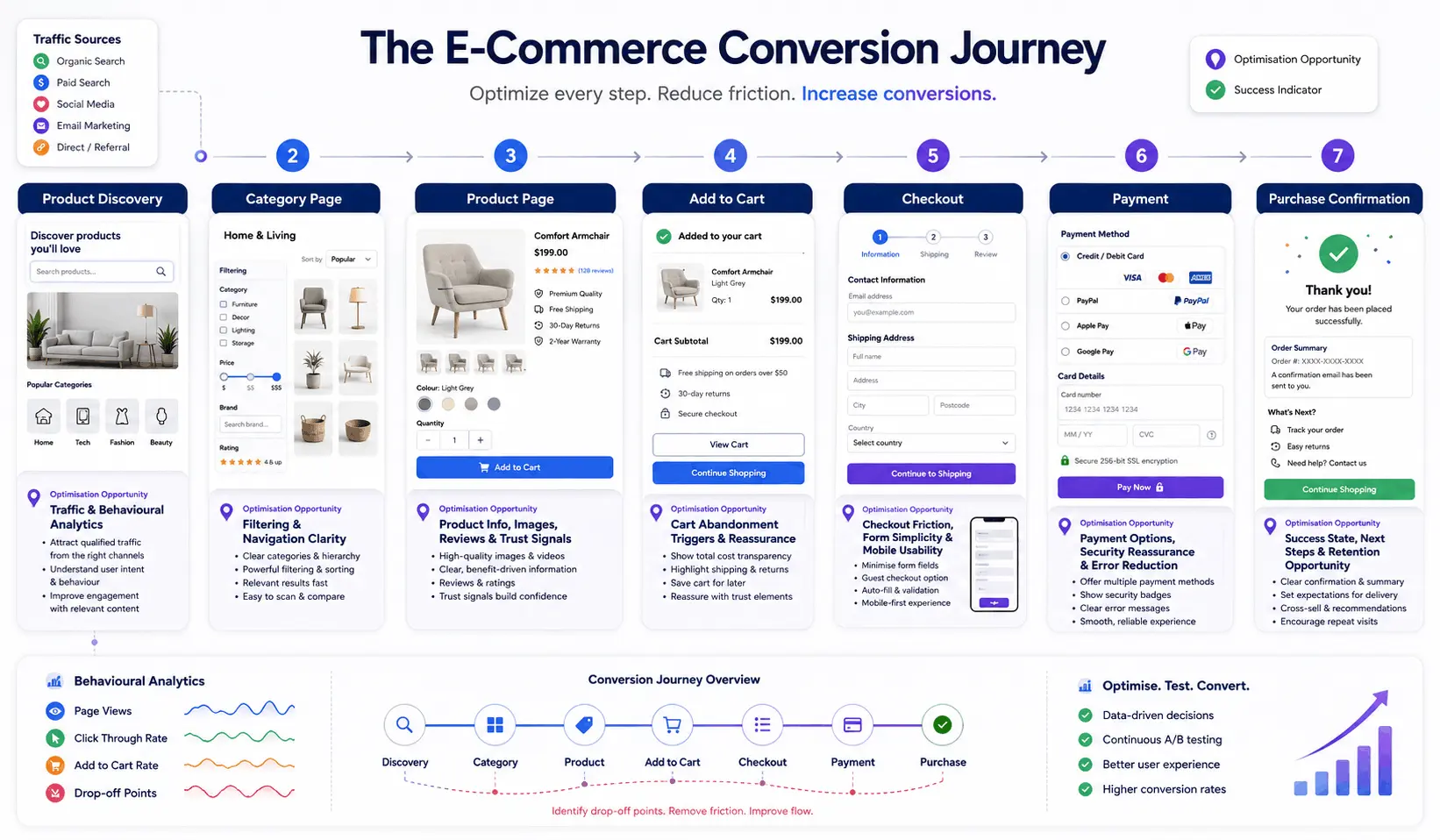
Ecommerce conversion optimisation requires more than improving a homepage. Customers move through product discovery, category filtering, product comparison, variant selection, cart review, delivery information, payment, and checkout. Friction at any of these stages can reduce completed orders.
As an ecommerce conversion rate optimisation agency, FiliCode can review product detail pages, category architecture, merchandising logic, search usability, mobile navigation, promotional messaging, cart behaviour, checkout steps, trust content, and tracking quality. For businesses with a wider commerce roadmap, our ecommerce solutions can support the platform and development work behind conversion improvements.
Shopify stores also need platform-aware recommendations. A CRO partner working with Shopify should understand theme constraints, application dependencies, tracking setup, page speed, cart behaviour, checkout limitations, and the effect of third-party scripts before recommending changes.
Review Your Ecommerce Funnel
CRO is especially useful when a business already attracts meaningful traffic but wants a clearer understanding of why visitors do or do not convert. It can also support redesign decisions, paid campaign efficiency, ecommerce growth, SaaS sign-up journeys, and lead generation.
Improving landing page relevance and post-click journeys can help businesses get more value from qualified advertising traffic. Our PPC management services can support acquisition and conversion alignment.
More search visitors create an opportunity to improve service-page journeys, lead qualification, mobile usability, and calls to action. Businesses building visibility can also use our small business SEO services.
Research before a redesign can reveal which pages, messages, journeys, and interaction patterns need improvement instead of rebuilding assumptions into a new website.
A structured testing framework gives marketing, design, product, and leadership teams a shared way to evaluate opportunities and learn from results.
FiliCode approaches CRO as a combination of research, UX, analytics, content, marketing, and technical implementation. This matters because conversion problems rarely belong to one discipline. A weak result may be caused by poor traffic relevance, broken tracking, slow performance, confusing language, unclear value, difficult interaction design, or several small issues working together.
Our recommendations are prioritised and explained clearly. We do not promise guaranteed uplifts or present every website change as an experiment. Instead, we clarify what the evidence shows, which assumptions still need validation, what implementation requires, and how outcomes should be measured. Support can continue through further research, implementation, measurement, and optimisation cycles as customer behaviour and business priorities change.
Whether you are comparing CRO partners in the UK, Australia, or another market, the useful questions remain similar: How does the team investigate behaviour? How are hypotheses prioritised? Who implements changes? How are results measured? And how is learning carried into the next cycle?
Start With A Practical CRO DiscussionTell us about your website, business model, traffic sources, important conversion actions, current analytics setup, and the customer journey you want to improve. FiliCode will review the fit and recommend a practical direction for research, prioritisation, implementation, and measurement.