Websites Planned Around How Virginia Customers Compare, Trust, and Contact Businesses
FiliCode is a Virginia web design company helping service businesses, professional firms, growing teams, and multi-location brands build websites that are easy to use, technically sound, search-friendly, and ready to turn qualified visits into calls, forms, bookings, and sales conversations.
Discuss Your Website ProjectProfessional website design combines business goals, content architecture, responsive layouts, user experience, development quality, accessibility, page speed, conversion paths, analytics, and post-launch support. The goal is not simply to make a website look modern. It is to create a dependable digital system that helps people understand the business, find the right information, and take the next step with confidence.
Visitors should quickly understand who you help, what you offer, where you operate, and why your approach is worth considering.
Navigation, service pages, proof points, forms, booking steps, and calls to action should support real customer decisions.
Clean code, mobile usability, security, sensible CMS setup, performance work, and reliable integrations protect the foundation.
Forms, calls, quote requests, purchases, registrations, and booking events should be trackable so improvement is based on evidence.
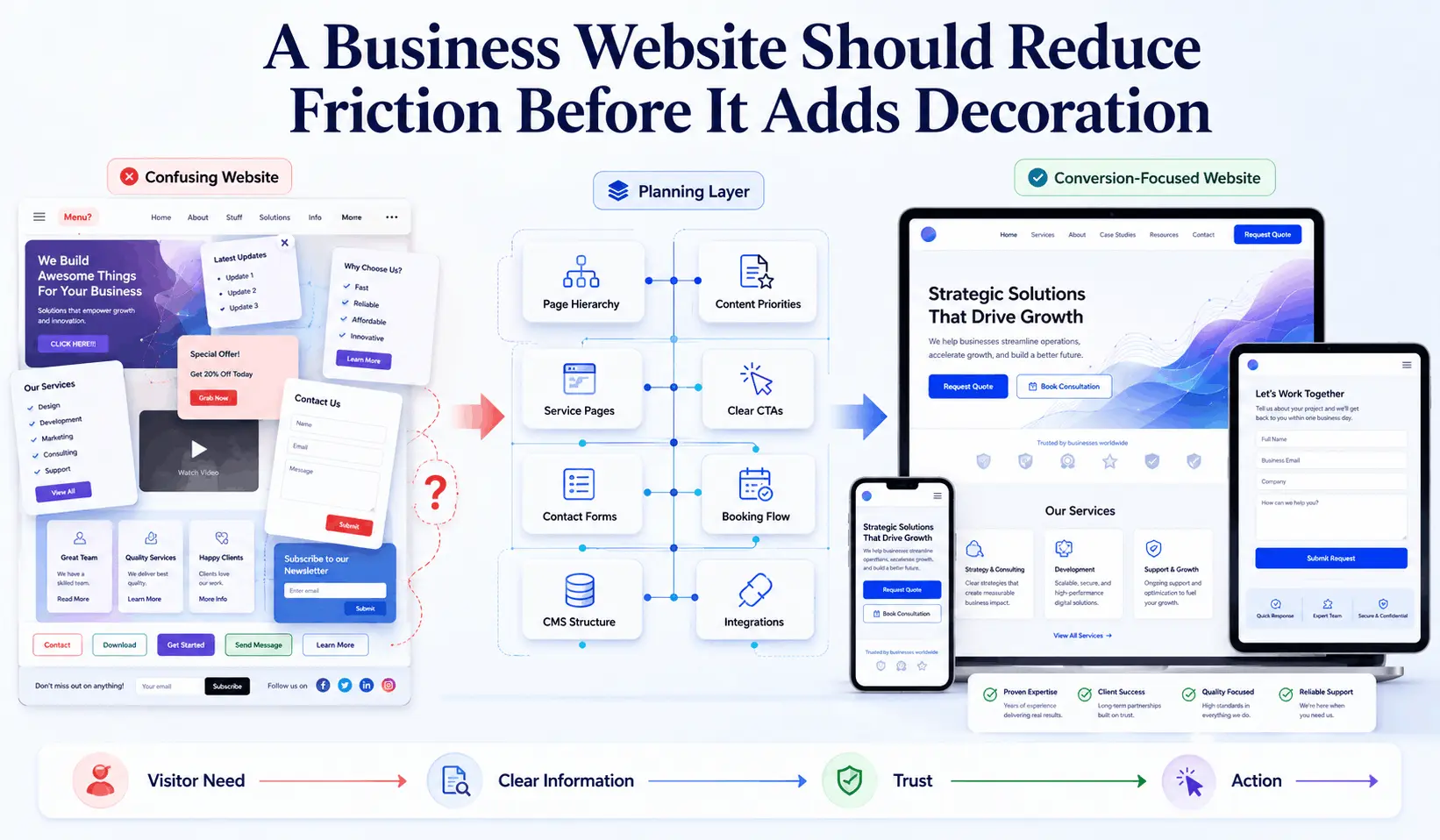
A strong website starts by answering practical questions. What does the visitor need to understand first? Which services deserve dedicated pages? Which proof points matter before a customer contacts you? Where should a person go when they are ready to request a quote, book a consultation, or compare options?
FiliCode plans those decisions before visual polish. We map page hierarchy, content priorities, calls to action, forms, conversion paths, CMS requirements, integrations, and technical constraints. That planning helps prevent a common problem: a visually attractive site that still leaves users unsure where to click or what to do next.
Projects that need a broader build can use our website design and development services for planning, UI implementation, CMS development, performance improvements, integrations, testing, and launch support.
Different businesses need different technical foundations. FiliCode scopes each project around the content, workflows, integrations, team responsibilities, growth plans, and customer actions the website must support.
Plan page layouts, visual hierarchy, calls to action, service pathways, content modules, and reusable design components around your brand and business model.
Build responsive front ends, reusable components, forms, dashboards, business logic, API connections, and CMS workflows that fit the actual project requirements.
For teams that need controlled editing and reusable content, our WordPress development services support custom themes, templates, integrations, and maintainable admin workflows.
Plan layouts and interactions for smaller screens first, then adapt them across tablets, laptops, and larger displays. We also consider keyboard navigation, clear forms, usable contrast, readable structure, and practical WCAG accessibility requirements.
Create focused pages for campaigns, service categories, locations, or offers with clear intent, concise decision support, useful forms, and measurable actions.
Build or improve online buying experiences with product structures, payment connections, checkout workflows, account features, and required business integrations. Projects can also include page-speed improvements and connections with CRM tools, email platforms, booking systems, analytics, and lead-routing workflows.
Need a website scope that matches your actual operations?
Plan The BuildFiliCode uses a five-phase delivery approach that keeps strategy, design, development, review, and launch responsibilities visible. The exact workflow can be adjusted for project size, but each phase has a clear purpose and review point.
01. Discover
02. Structure
03. Design
04. Build
05. Launch
We review business goals, audiences, existing analytics, competitors, content needs, required integrations, CMS roles, approval responsibilities, and launch constraints.
We decide what pages are needed, how they connect, which content modules are reusable, where conversion actions belong, and which content must be ready before development.
Layouts are designed as a consistent system, not isolated screens. Reusable components help keep headings, cards, forms, CTAs, spacing, and responsive behavior consistent.
Development covers templates, components, forms, integrations, CMS controls, redirects where required, analytics events, device testing, browser checks, and practical performance improvements before approval.
After launch, we verify key pages, forms, analytics, redirects, indexability settings, SSL behavior, and critical integrations. CMS training and support scope are agreed according to the project.
A business serving Fairfax, Northern Virginia, Roanoke, Lynchburg, Norfolk, Fredericksburg, or Virginia Beach may need different page priorities depending on its customers, services, competition, and sales process. Location relevance should come from useful information and real service coverage, not from repeating the same paragraph with a different city name.
Explain scope, who the service is for, how the process works, common concerns, and the next action without hiding essential information behind generic copy.
Use genuine service areas, office information, project context, operating details, and useful local information where it helps customers understand availability.
Forms, phone actions, appointment requests, CRM routing, and notifications can be planned around how staff actually qualify and respond to inquiries.
Structured components and CMS fields can help teams manage service, team, case study, resource, and location content without rebuilding every page manually.
As content grows, the website needs clear categories, sensible menus, controlled editing permissions, and templates that remain consistent across teams.
Businesses focused on Fairfax can also review our Fairfax web design services for a more locally focused service page and regional project context.
A website is easier to manage when decisions about hosting, SSL, user access, backups, content editing, analytics, integrations, ownership, and ongoing support are discussed before launch. FiliCode treats these operational requirements as part of project planning, not as problems to discover later. Platform responsibilities, update workflows, access controls, backup expectations, and maintenance needs are reviewed according to the website stack and agreed project scope.
We define deliverables, dependencies, review responsibilities, content requirements, integrations, and support expectations so the project has visible boundaries.
Design decisions are reviewed alongside implementation realities such as performance, responsive behavior, CMS flexibility, integrations, and future maintenance.
Feedback is tied to concrete decisions: page hierarchy, content gaps, component behavior, launch risks, integrations, and measurable customer actions.
The website can evolve through new landing pages, service content, integrations, performance work, technical fixes, and carefully scoped redesign improvements.
FiliCode can review your current site, business goals, content needs, platform constraints, integrations, and conversion priorities before recommending whether you need a focused refresh, a phased rebuild, or a complete website project.
Request A Website ReviewGood web projects connect design, content, development, performance, accessibility, security, measurement, and ongoing management. The exact stack depends on the business and project requirements.
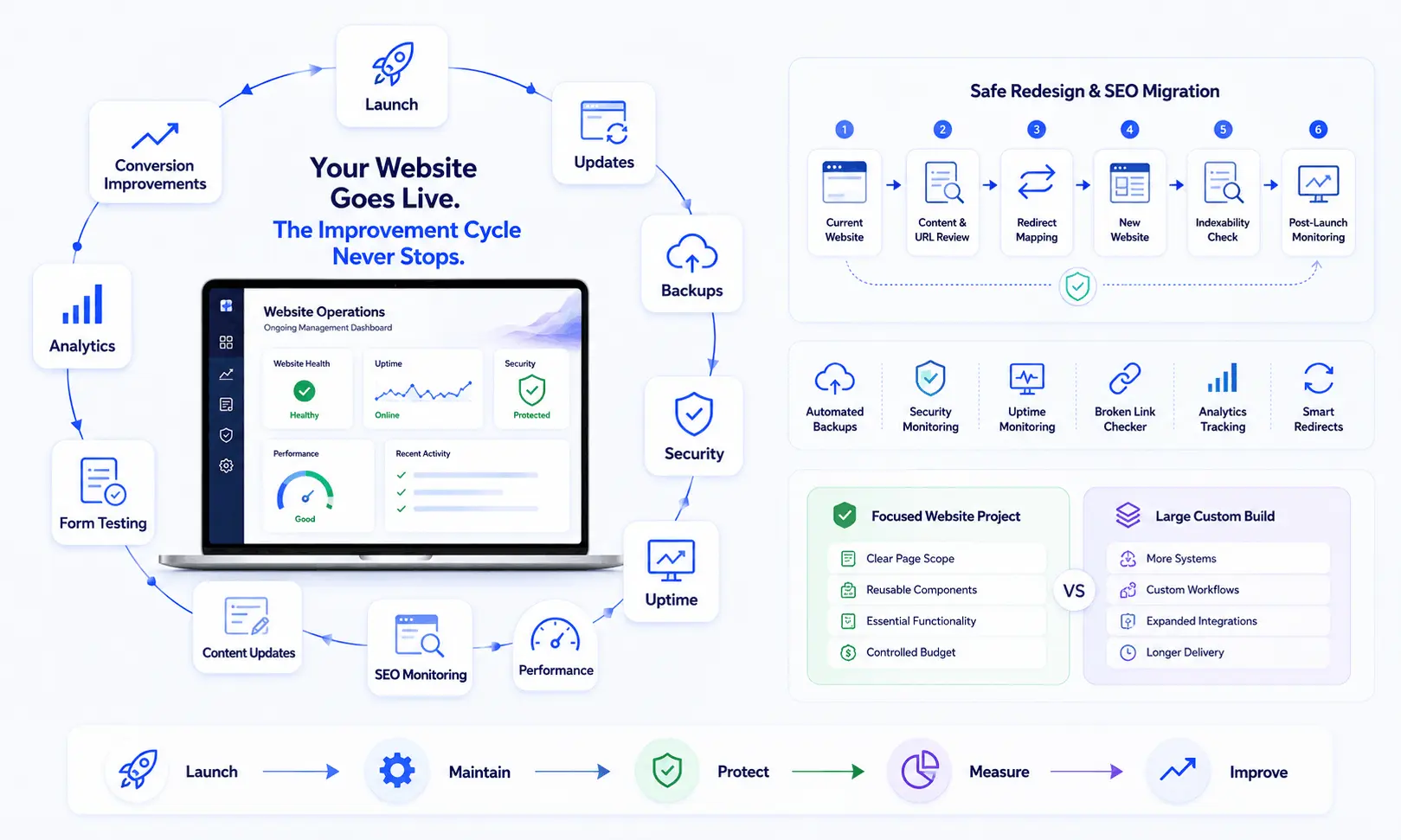
Launch is a transition point, not the end of website responsibility. A live site may need software updates, backups, uptime checks, security reviews, content edits, form testing, performance monitoring, broken-link fixes, analytics verification, and periodic conversion improvements.
FiliCode can scope website maintenance and support according to the platform and business needs. We also plan redesign projects carefully because changing URLs, page content, internal links, metadata, or site architecture without a migration plan can damage search visibility. Businesses that need search-specific guidance can coordinate website work with our Virginia SEO expertise to review redirects, indexability, content preservation, and post-launch monitoring.
Budget-conscious businesses do not always need a large custom build. Our affordable website design options can be considered when the project has a focused scope, clear page requirements, and limited custom functionality.
A useful comparison goes beyond portfolio appearance. Ask how the team handles scope, content, responsive behavior, accessibility, integrations, SEO migration, testing, ownership, and support. Even a basic understanding of responsive web design can help buyers ask better questions about how layouts adapt across screen sizes.
Scope
Content
Responsive
Access
Integrations
Testing
Support
Share your current website, target customers, required pages, preferred platform, integrations, content status, launch goals, and any technical concerns. FiliCode will review the project fit and recommend a practical direction for design, development, migration, or phased improvement.