SEO Built Around How Alabama Customers Search, Compare, and Contact Businesses
FiliCode is an Alabama SEO company helping service businesses, local brands, professional firms, ecommerce teams, and multi-location organizations improve search visibility through technical SEO, useful content, local optimization, and measurable conversion paths.
Request Your SEO ReviewA capable SEO partner improves how a website is discovered, understood, trusted, and used. That includes crawlability, indexation, page structure, local search signals, content quality, internal linking, conversion tracking, and the ongoing analysis needed to decide what should be improved next.
SEO is a coordinated system connecting search demand with accessible pages, clear answers, credible business information, and measurable actions such as calls, forms, bookings, and purchases.
Search engines need clean architecture, crawlable pages, sensible canonicals, mobile usability, and dependable performance.
Service pages and supporting content should answer real questions and match the intent behind valuable searches.
Accurate business details, location context, reviews, citations, and Google Business Profile activity support local discovery.
Rankings matter most when they contribute to qualified traffic, meaningful inquiries, revenue, and stronger market visibility.
Effective SEO begins by understanding what the business sells, which customers are valuable, where those customers are located, how they evaluate providers, and which actions indicate commercial intent. Keyword research is useful only when it helps organize that information into a practical page and content plan.
FiliCode reviews the current website, search visibility, service structure, competitors, analytics, conversion paths, and local presence before recommending priorities. A local contractor may need city and service pages, stronger Google Business Profile signals, and call tracking. A professional firm may need clearer expertise pages, stronger internal linking, and content that answers complex decision-stage questions. An ecommerce business may need category architecture, product indexing controls, and conversion-focused content. Companies planning regional expansion can also review our North Carolina SEO framework to understand how location-specific demand can influence page planning.
Smaller teams can also review our SEO services for small businesses when they need a focused plan that balances technical work, content development, and realistic resource limits.
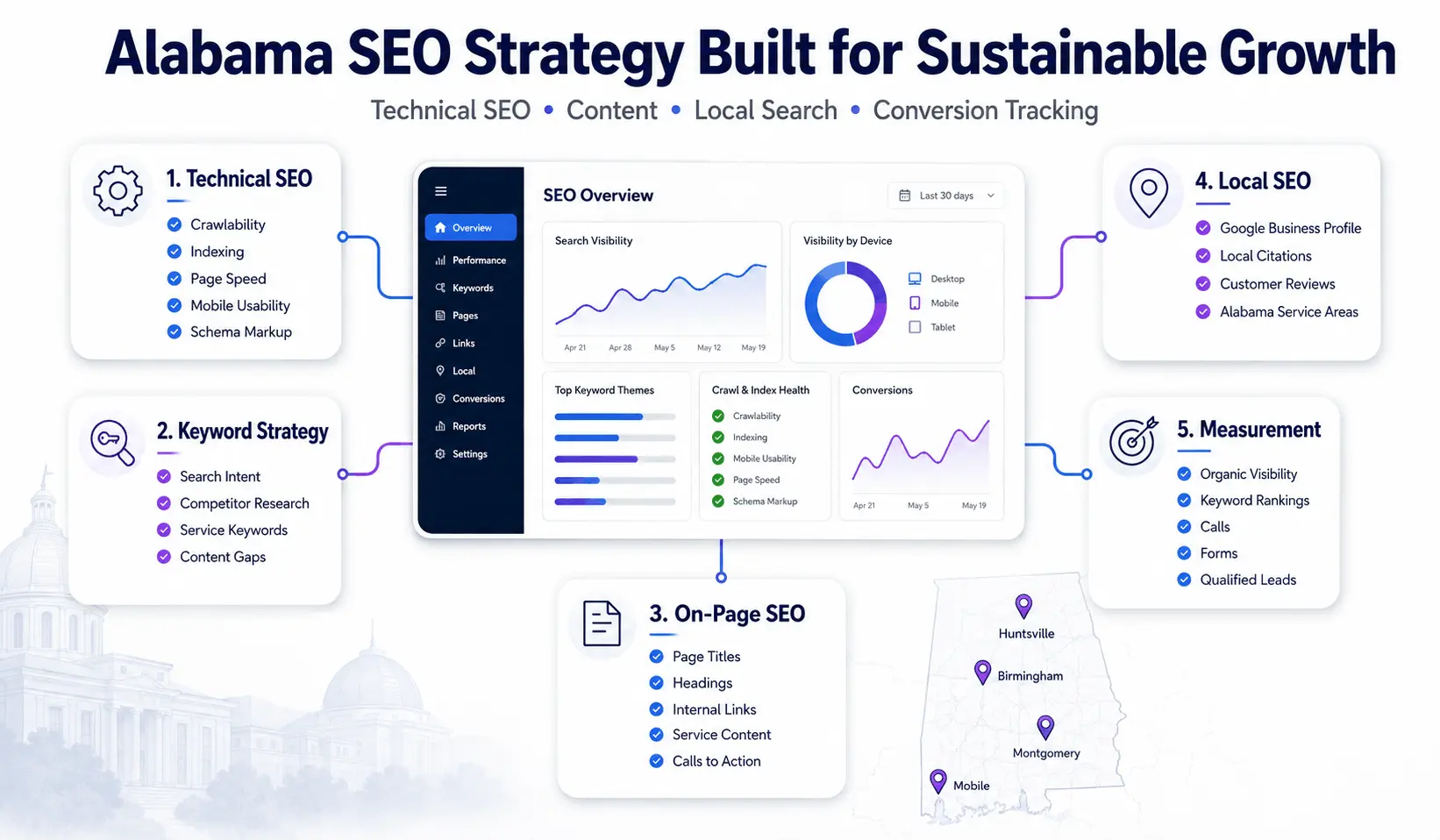
Strong search performance rarely comes from one tactic. FiliCode combines technical, on-page, local, content, authority, and measurement work around the website's limitations and commercial goals.
Review crawling, indexing, redirects, canonical tags, XML sitemaps, page speed, mobile usability, structured data, duplicate content, and site architecture.
Map commercial, local, informational, and comparison searches to the right pages while identifying content gaps and unrealistic keyword targets.
Improve titles, headings, copy, internal links, page purpose, supporting evidence, FAQs, media, and calls to action without forcing repetitive keywords.
Strengthen Google Business Profile information, location pages, local citations, review signals, service areas, and locally relevant content for cities such as Birmingham and Huntsville.
Create useful service pages, guides, comparisons, and link-worthy resources while strengthening relevant citations, editorial links, brand mentions, and other credible authority signals. FiliCode avoids bulk link schemes that create risk without supporting real business trust.
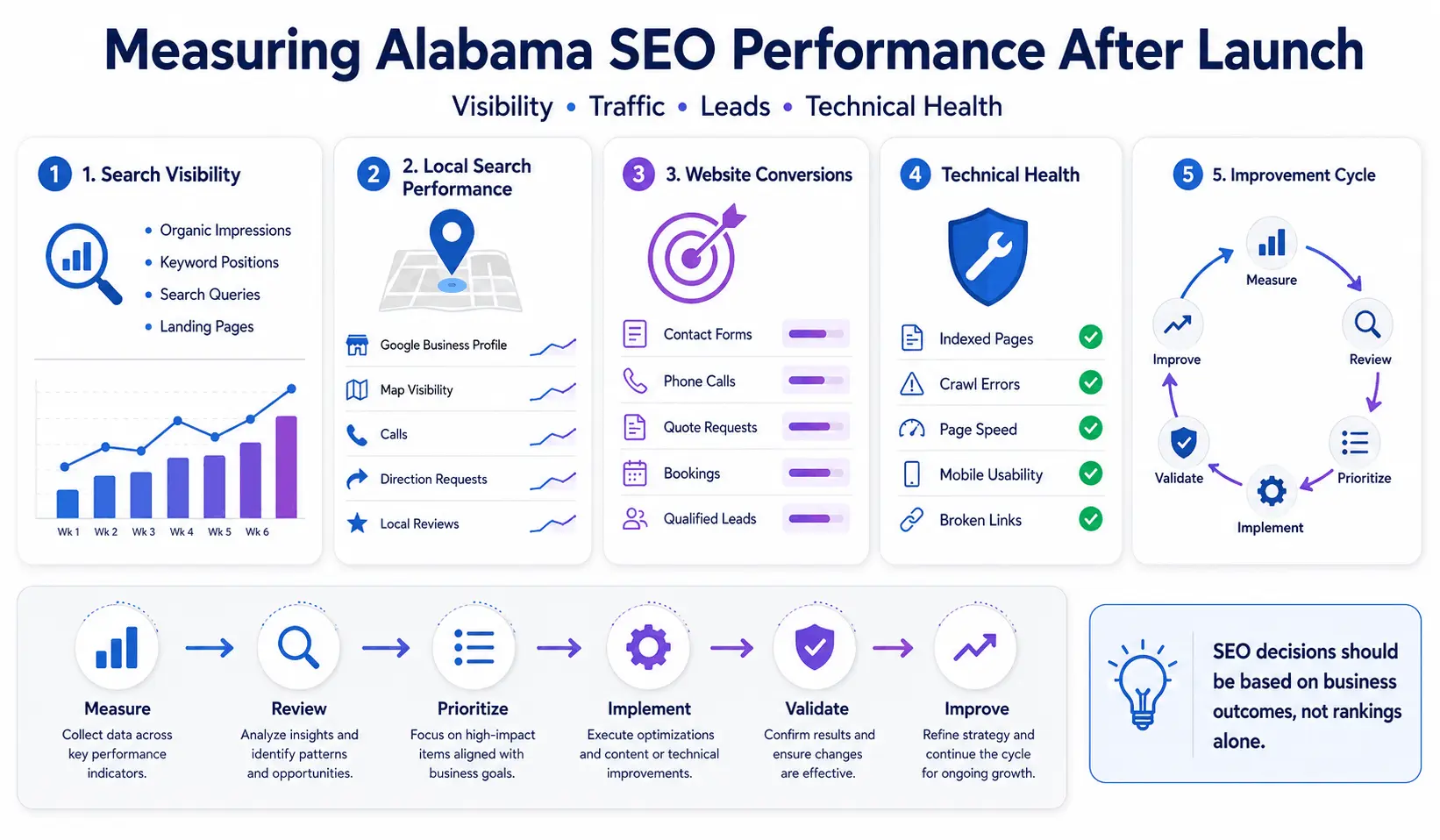
Track organic visibility, landing-page performance, calls, forms, revenue events, and conversion gaps so decisions are based on evidence rather than rankings alone.
Need a clear SEO scope instead of a generic package?
Build Your SEO PlanFiliCode uses a five-stage SEO operating model that keeps technical fixes, content, local optimization, and reporting connected to business priorities.
01. Diagnose
02. Prioritize
03. Implement
04. Validate
05. Improve
We review services, audience segments, priority locations, competitors, analytics, lead quality, existing rankings, crawl behavior, and content coverage.
Issues are grouped by business value, technical dependency, implementation effort, and risk. This prevents low-value tasks from consuming the entire roadmap.
Technical changes, page updates, internal links, new content, and local improvements are released in manageable groups with clear ownership.
We verify that important pages remain accessible, indexable, internally linked, correctly redirected, and aligned with their intended search purpose after changes are published.
Reporting explains what changed, what improved, what remains uncertain, and which next action is most likely to support visibility, leads, or revenue.
Local companies, ecommerce stores, franchises, and enterprise teams should not receive the same SEO roadmap. Search intent, website architecture, location coverage, approval workflows, and conversion goals determine which work should come first.
Contractors, clinics, professional firms, and home-service companies often need accurate Google Business Profile information, strong service pages, local citations, review workflows, and call or form tracking. Birmingham, Huntsville, Mobile, and Montgomery campaigns should reflect real service coverage rather than duplicated city copy.
Ecommerce SEO may require category architecture, product indexing controls, faceted-navigation rules, structured data, internal linking, useful buying content, and revenue tracking. The priority is helping search engines understand the catalog while making products easier for customers to discover and compare.
Larger organizations need scalable templates, location governance, distinct market content, technical quality controls, and reporting by region. Businesses expanding into nearby markets can review our Georgia SEO approach when planning state-specific pages. FiliCode builds reusable systems without turning every location page into the same text with a different city name.
FiliCode connects SEO recommendations with implementation realities. We explain dependencies, avoid unrealistic guarantees, document priorities, and keep technical, content, local, and conversion work visible within one roadmap. The goal is not to generate a long task list. The goal is to make the next business decision clearer.
Deliverables, dependencies, approvals, access requirements, and reporting expectations are defined before work begins.
Recommendations consider templates, CMS behavior, redirects, schema, performance, analytics, and development constraints.
Updates focus on decisions, risks, progress, outcomes, and next actions rather than unexplained charts or vanity metrics.
The roadmap can expand into new services, locations, content clusters, ecommerce categories, or technical improvements as priorities change.
FiliCode can review your website, priority services, target locations, technical risks, current visibility, and lead paths before recommending a focused improvement plan.
Talk to an Alabama SEO Company
SEO requires observation after implementation. Search engines need time to crawl and reassess pages, while businesses need enough data to judge whether visibility is turning into useful traffic and qualified inquiries. Early reporting should confirm that changes were implemented correctly before drawing broad conclusions.
FiliCode monitors indexation, landing-page visibility, query movement, technical errors, local signals, engagement, calls, forms, and conversion paths. When results are weak, the next step may involve improving content quality, correcting search intent, strengthening internal links, resolving technical limitations, or changing the offer and conversion experience.
Organizations comparing location-focused programs can also review our Ohio SEO services and Kansas SEO strategy to understand how market conditions and search demand affect page planning. For a general definition of the discipline, see search engine optimization.
A useful proposal should define the SEO scope, implementation responsibilities, required client input, and reporting approach. These seven areas help businesses compare providers without relying on package names or ranking guarantees.
Define priority services, locations, audiences, conversion actions, and commercial outcomes before choosing keywords or deliverables.
Document and prioritize crawl, indexation, mobile, performance, schema, redirect, canonical, and architecture issues.
Assign important searches to suitable service, location, category, comparison, or educational pages to prevent overlap.
Define work for Google Business Profile, service areas, city pages, citations, reviews, and local conversion tracking.
Separate page updates, new content, internal linking, citations, authority building, and legitimate link-earning work.
State whether FiliCode, your developer, content team, or another stakeholder owns and approves each task.
Reporting should connect visibility, landing pages, calls, forms, bookings, purchases, and technical health with the next action. Rankings are one signal, not the only definition of success.
Request a Clear SEO ScopeShare your website, priority services, target cities, current SEO concerns, lead goals, analytics access, and implementation resources. FiliCode will review the project fit and recommend a practical direction for technical SEO, local visibility, content, or ongoing search growth.