Websites Planned for Island Businesses, Visitor Decisions, Local Search, and Mobile-First Customer Journeys
FiliCode is a Hawaii web design company helping local service providers, tourism businesses, professional firms, retailers, and growing teams build responsive websites that explain their value clearly, support online bookings or inquiries, and remain practical to manage after launch.
Discuss Your Hawaii WebsiteA professional web design partner plans how a website should communicate, function, load, convert, and grow. The work can include content architecture, responsive web design, custom development, accessibility, booking or inquiry workflows, analytics, search-friendly page structures, CMS setup, integrations, testing, and post-launch support.
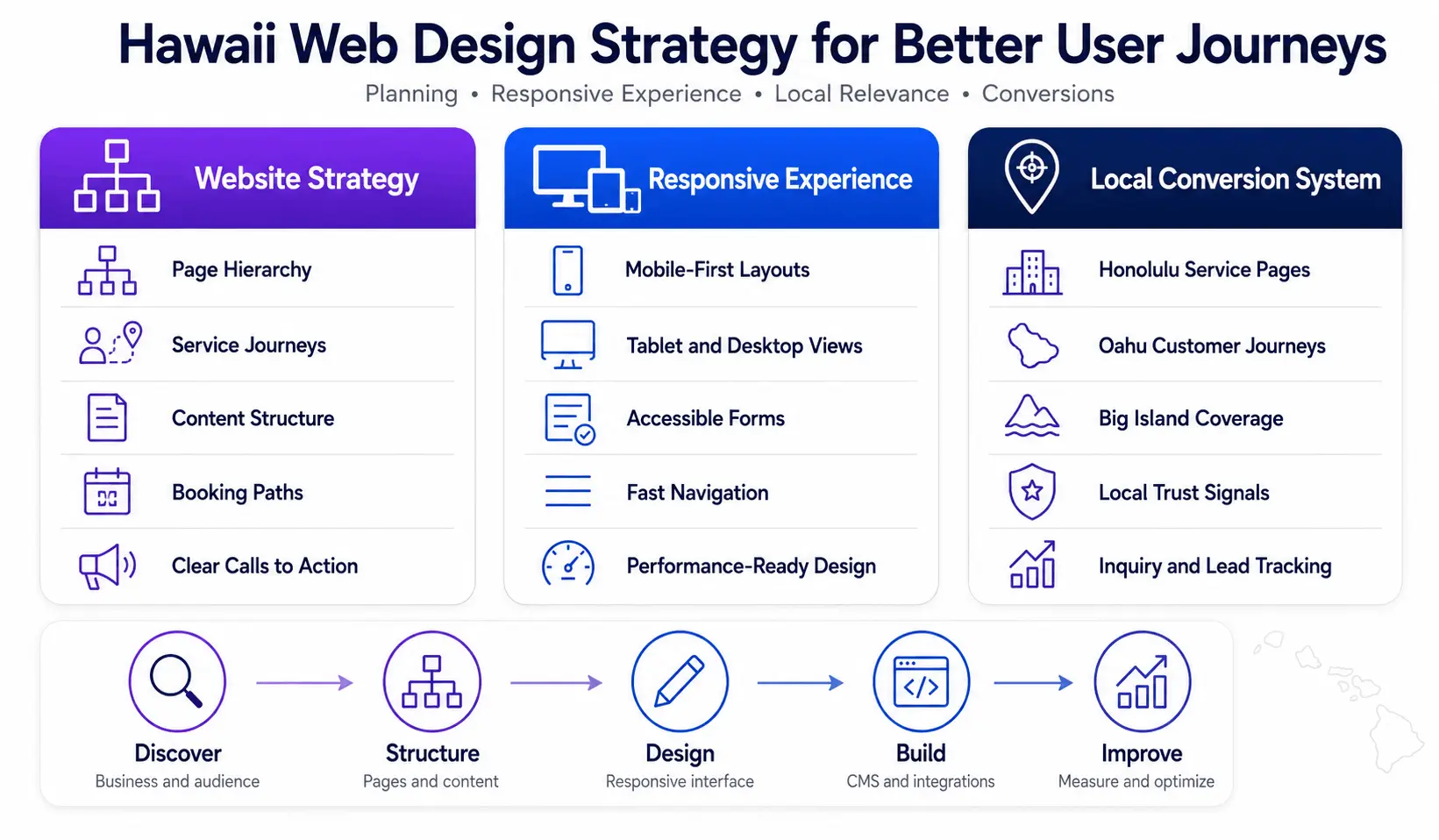
For Hawaii businesses, the website must also account for mobile visitors, local and visitor search behavior, service-area clarity, seasonal demand, time-zone expectations, and customers comparing options before they arrive on an island or contact a local provider.
Visitors should understand which islands, cities, neighborhoods, and customer types the business serves without searching through vague location copy.
Calls, maps, availability, menus, forms, booking steps, and service details should remain easy to use on smaller screens.
Booking systems, CRMs, email tools, analytics, payment services, and lead notifications should fit the real operating workflow.
Reusable templates and structured CMS fields help teams add services, locations, offers, resources, and campaigns without rebuilding the site.
A resident looking for a professional service may compare experience, location, availability, and responsiveness. A visitor planning an activity may care about dates, pickup details, cancellation terms, mobile booking, and what to expect. A multi-location company may need different service pages, team permissions, lead routing, and reporting. Those journeys should influence the website structure before visual design begins.
FiliCode maps the questions customers ask, the pages they need, the proof that reduces uncertainty, and the actions the business can realistically support. This prevents decorative layouts from becoming obstacles. It also helps content, design, and development work toward the same outcome instead of being completed as disconnected tasks.
Businesses that want design and organic visibility planned together can coordinate the project with our
Hawaii SEO specialist services
for location strategy, indexability, internal linking, content preservation, and post-launch search monitoring.
FiliCode does not force every project into the same package. The website scope is shaped by audience, content, platform, integrations, internal responsibilities, accessibility needs, and the actions customers should complete.
Custom web design Hawaii projects can include information architecture, visual hierarchy, brand identity, reusable components, conversion paths, and layouts designed around specific services or customer groups.
Our development work can cover responsive front ends, WordPress development, custom templates, content management systems, forms, dashboards, API connections, multilingual website structures, and controlled editing workflows.
Tour operators, accommodations, activity providers, restaurants, and destination businesses may need availability details, online booking systems, clear policies, map information, mobile calls to action, and conversion tracking.
A mobile-friendly website should preserve readable content, usable navigation, clear forms, visible actions, and stable layouts. Projects can also account for keyboard use, contrast, labels, and practical ADA compliant accessibility improvements.
Focused landing page design can support services, campaigns, and island locations. Search-friendly templates, Google Analytics events, calls, forms, and booking actions make performance easier to review.
Ecommerce web design, website redesign services, payment connections, CRM integrations, website hosting coordination, maintenance, performance work, and phased improvements can be scoped according to the existing platform.
Need a website plan that matches your team, market, and customer workflow?
Build The Right ScopeLocation pages should reflect genuine differences in services, audiences, logistics, and operating context. A Honolulu web design company page should not be reproduced for every island by swapping place names. Useful location content explains where the business works, what changes by area, and how customers can take action.
A website designer Honolulu businesses hire should prioritize calls, maps, quick comparisons, availability, menus, service details, and short forms that work well while customers are moving.
Content may need to distinguish local customers from travelers so pricing, timing, booking details, and service expectations are clear for both groups.
Service and location pages should provide substance rather than repeated city names. Clear scope, proof, process, and useful FAQs create stronger search and conversion value. This is also why our California web design planning focuses on real market context instead of copied location wording.
A website designer Big Island businesses work with should make coverage, travel requirements, pickup points, delivery areas, schedules, and contact expectations easy to understand.
Reusable CMS sections can help teams update availability, seasonal services, special offers, closures, event pages, and travel guidance without requesting a redesign.
FiliCode applies the same market-specific approach to other regional projects, including our Virginia website projects. Each page and project is adapted to its market rather than copied from a single template.
FiliCode uses a seven-step website delivery process. The steps keep business decisions, content responsibilities, design reviews, development, testing, and launch checks visible so teams know what is needed and when.
01. Discover
02. Map
03. Structure
04. Design
05. Build
06. Verify
07. Launch
We review audiences, services, business goals, current analytics, competitors, content gaps, platform limits, internal approvals, and the questions customers ask before contacting the business.
We define page hierarchy, content modules, calls to action, forms, booking paths, responsive behavior, and interface patterns before development begins. Similar content mapping also supports our Pennsylvania website design work when service pages and location structures need careful planning.
Templates, CMS controls, forms, ecommerce features, APIs, lead routing, analytics events, and third-party services are implemented according to the approved scope.
Testing covers mobile and desktop layouts, forms, navigation, browser behavior, accessibility checks, page speed, analytics, redirects, metadata, indexability, and critical integrations.
After deployment, FiliCode verifies priority pages and customer actions, provides agreed CMS guidance, and resolves launch issues within the defined support period.
A dependable partner should explain scope, responsibilities, tradeoffs, risks, and support boundaries before development. FiliCode connects design decisions with technical implementation, content readiness, search considerations, accessibility, analytics, and future maintenance. This creates realistic expectations and gives the business a clearer foundation for later improvements.
Deliverables, dependencies, content ownership, review rounds, integrations, and support expectations are documented before the build advances.
Responsive behavior, code quality, CMS usability, performance, security responsibilities, and future maintenance are considered during design.
Calls, forms, purchases, bookings, registrations, and campaign actions can be tracked so later decisions are based on evidence.
The website can grow through new pages, integrations, technical fixes, conversion improvements, content updates, and carefully planned redesign phases.
FiliCode can review your current website, content, platform, customer journeys, booking or lead workflow, and growth priorities before recommending a focused redesign, phased rebuild, or new website. This roadmap approach also helps regional pages such as New Jersey business websites avoid generic structure and unclear growth paths.
Request A Website ReviewStrong websites connect design, content, development, accessibility, performance, measurement, search visibility, and ongoing management.
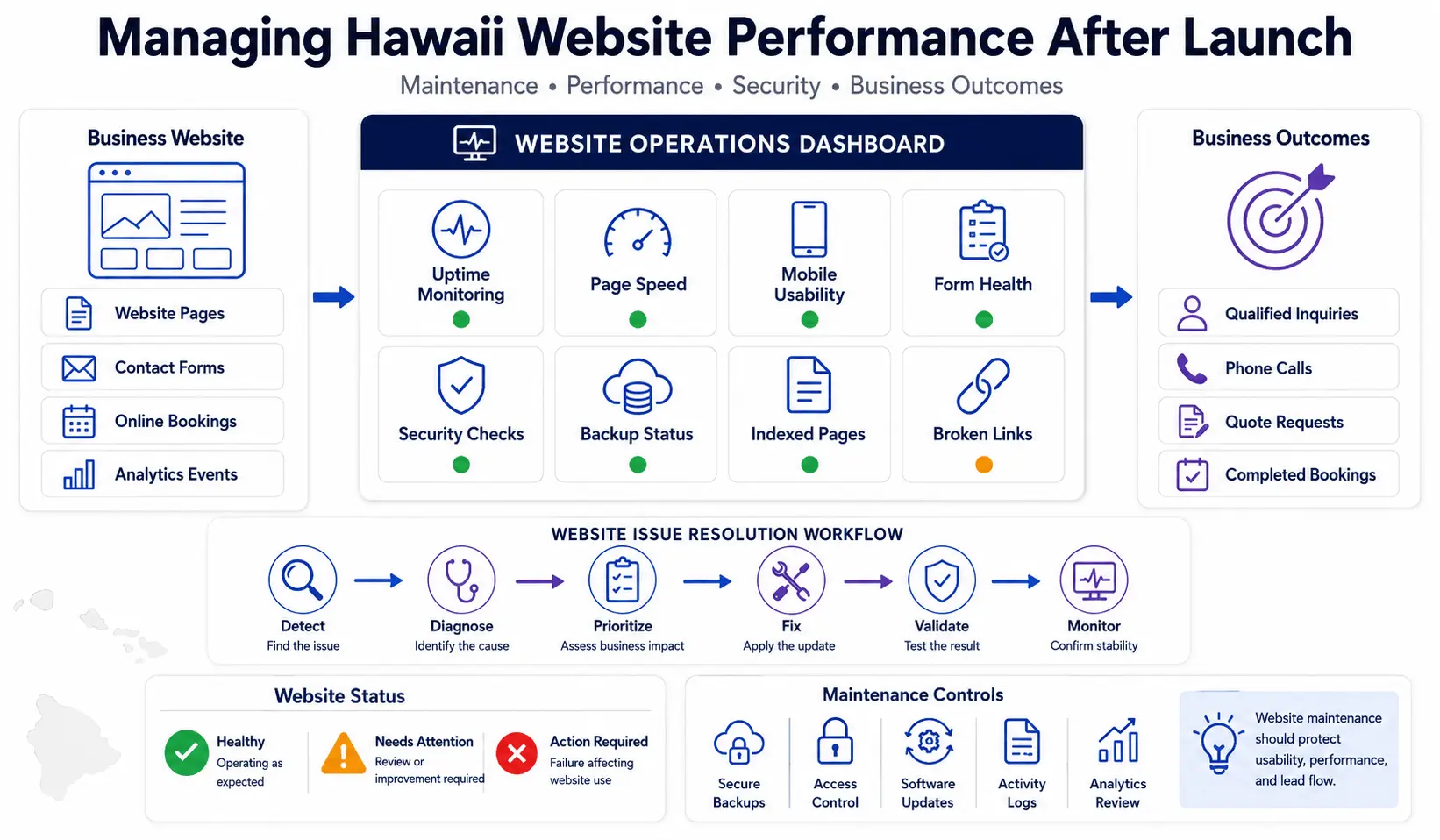
Launch begins the operating phase. A live website may need software updates, backups, uptime checks, security review, form testing, booking verification, content changes, broken-link fixes, page-speed work, analytics checks, and periodic conversion improvements.
FiliCode can define website maintenance and support according to the platform, ownership model, and business needs. We also plan redesign work carefully because URL changes, deleted content, altered navigation, missing redirects, or incorrect indexability settings can affect Google ranking. The risks cannot be eliminated completely, but a documented migration process can prevent avoidable problems.
Website teams should also understand the basics of
responsive web design
so they can evaluate how layouts, navigation, images, and forms adapt across devices.
Share your current website, target customers, island service areas, required pages, preferred platform, booking or ecommerce needs, integrations, content status, and launch goals. FiliCode will review the fit and recommend a practical direction for design, development, redesign, or phased improvement.