WooCommerce Stores Planned Around Products, Operations, Checkout, and Growth
A WooCommerce web design company plans, designs, develops, and supports WordPress ecommerce stores. The work can include product architecture, responsive interfaces, checkout configuration, payment and shipping connections, custom functionality, analytics, performance, security, and ongoing maintenance.
FiliCode combines commercial planning with practical engineering so store owners can manage products, serve customers, connect business systems, and improve the buying journey without building unnecessary complexity.
Discuss Your WooCommerce ProjectA store design should resolve how products are organized, how customers compare options, how orders move through the business, and which systems must exchange data. Visual design matters, but it should sit on top of a clear product model and an agreed operational workflow.
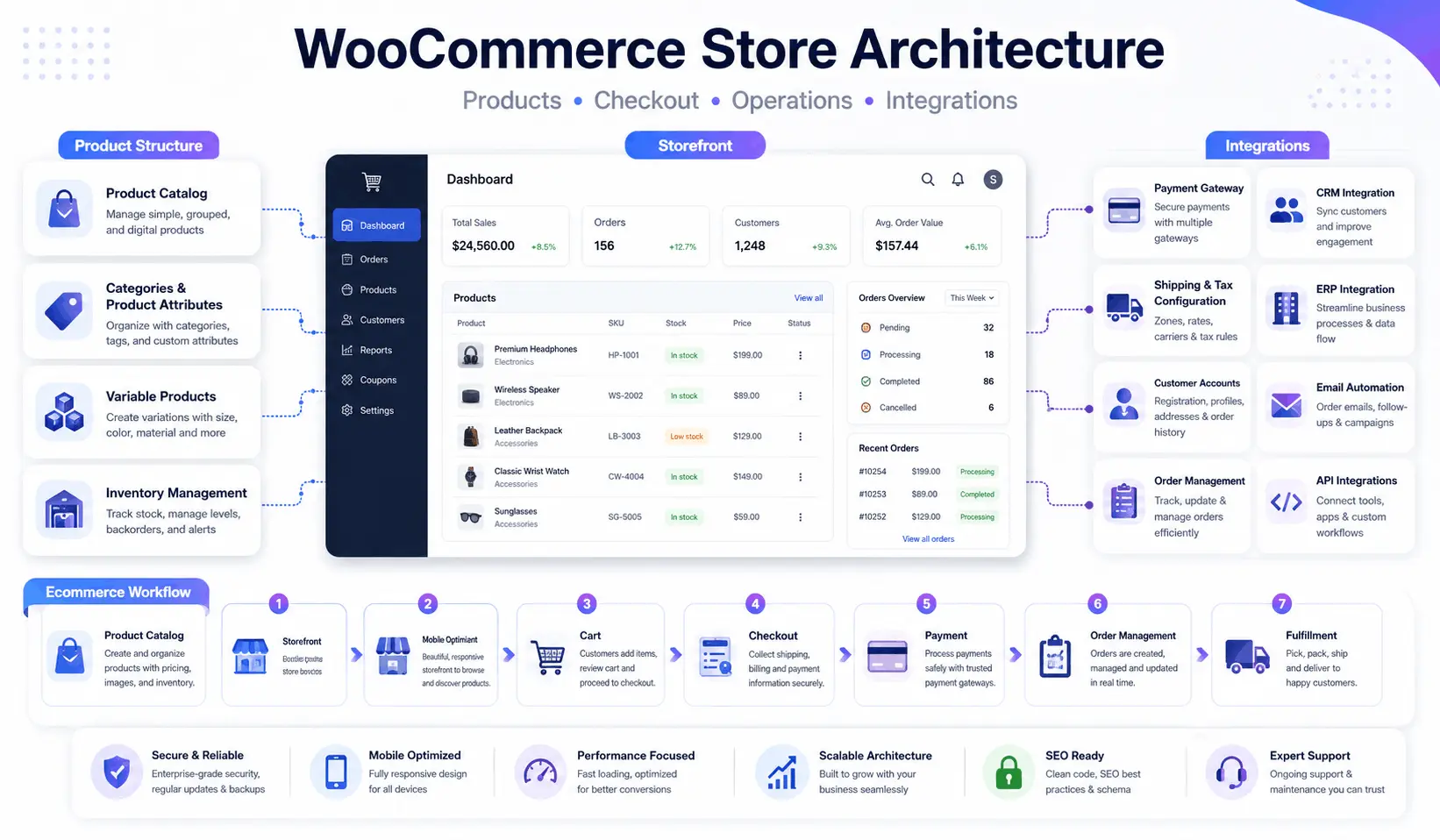
Categories, attributes, variations, bundles, filters, and product content should help customers find and compare the right option.
Pricing, availability, delivery, returns, payment methods, product details, and account options should be easy to understand.
Inventory, fulfillment, tax, shipping, CRM, ERP, accounting, and support workflows should match how the business actually operates.
Product views, add-to-cart events, checkout starts, purchases, refunds, and lead actions should be measured consistently.
A reliable WordPress ecommerce store starts with decisions about the catalog, customer types, pricing rules, order states, shipping zones, taxes, stock ownership, promotions, and integrations. These decisions affect templates, plugins, admin controls, and data flow. Solving them late can create duplicate work and fragile workarounds.
FiliCode maps the storefront and the operational layer together. We identify which features can use well-supported WooCommerce capabilities, which need careful configuration, and which genuinely require custom WooCommerce solutions. This keeps the build maintainable and helps prevent a store from becoming dependent on overlapping plugins.
Businesses planning a broader ecommerce build can also review our ecommerce website design services for platform planning, customer journeys, content, integrations, and conversion-focused implementation.
Store projects work better when design, development, commerce configuration, integrations, testing, and ownership are planned as one system. FiliCode scopes the work around the business model rather than applying a fixed feature list to every store.
Design category pages, product templates, filters, search, comparison paths, account areas, carts, and mobile interactions around real shopping decisions.
Build or refine reusable templates without burying essential store behavior inside a page builder or creating changes that are difficult to maintain.
Develop scoped functionality for pricing, customer roles, product rules, order workflows, subscriptions, bookings, or administrative controls when standard configuration is not enough.
Reduce avoidable checkout friction, configure payment gateway integration, validate taxes and shipping, and make error messages and order confirmations useful.
Connect CRM, ERP, inventory, fulfillment, email, analytics, tax, accounting, or marketplace systems through supported extensions, APIs, and webhooks.
Improve loading behavior, review plugin overhead, configure caching and backups, protect administrative access, and define a realistic maintenance process.
Need specialist development capacity for an existing store?
Hire WooCommerce DevelopersThese decisions shape more than appearance. They affect customer confidence, development effort, support workload, and the cost of future changes.
Attributes and variations should support filtering and selection without creating confusing duplicate products or unmanageable data.
Menus, product media, variation controls, forms, and checkout fields must remain usable on smaller screens and slower connections.
Required fields, account choices, delivery options, payment behavior, validation, and confirmation messages should match the transaction.
Delivery expectations, returns, stock status, pricing, specifications, and support details should be visible before customers commit.
Each system connection needs a source of truth, failure handling, logging, retry behavior, and an owner who can respond when data stops moving.
Theme code, plugins, third-party scripts, product media, hosting, caching, and database queries all contribute to store speed.
Staging, backups, access control, version tracking, testing, and rollback procedures should be defined before routine updates begin.
FiliCode uses a six-stage Store Readiness Framework. Each stage resolves a different type of risk before the store is handed over for daily operation.
01. Discover
02. Model
03. Design
04. Build
05. Verify
06. Stabilize
We review products, customers, pricing, taxes, fulfillment, returns, reporting, content, legal requirements, team roles, and launch constraints.
We define product fields, variation logic, order states, customer data, system ownership, API behavior, imports, exports, and error handling.
We design reusable templates for categories, products, campaigns, accounts, carts, checkout, support content, and transactional messages.
Development is completed in a staging environment with documented changes, controlled plugin use, test data, and agreed review points.
We test products, variations, coupons, taxes, shipping, payments, emails, accounts, refunds, integrations, analytics, devices, and failure cases relevant to the scope.
After launch, we verify live payments, webhooks, order emails, analytics, redirects, indexability, backups, monitoring, and any time-sensitive integrations.
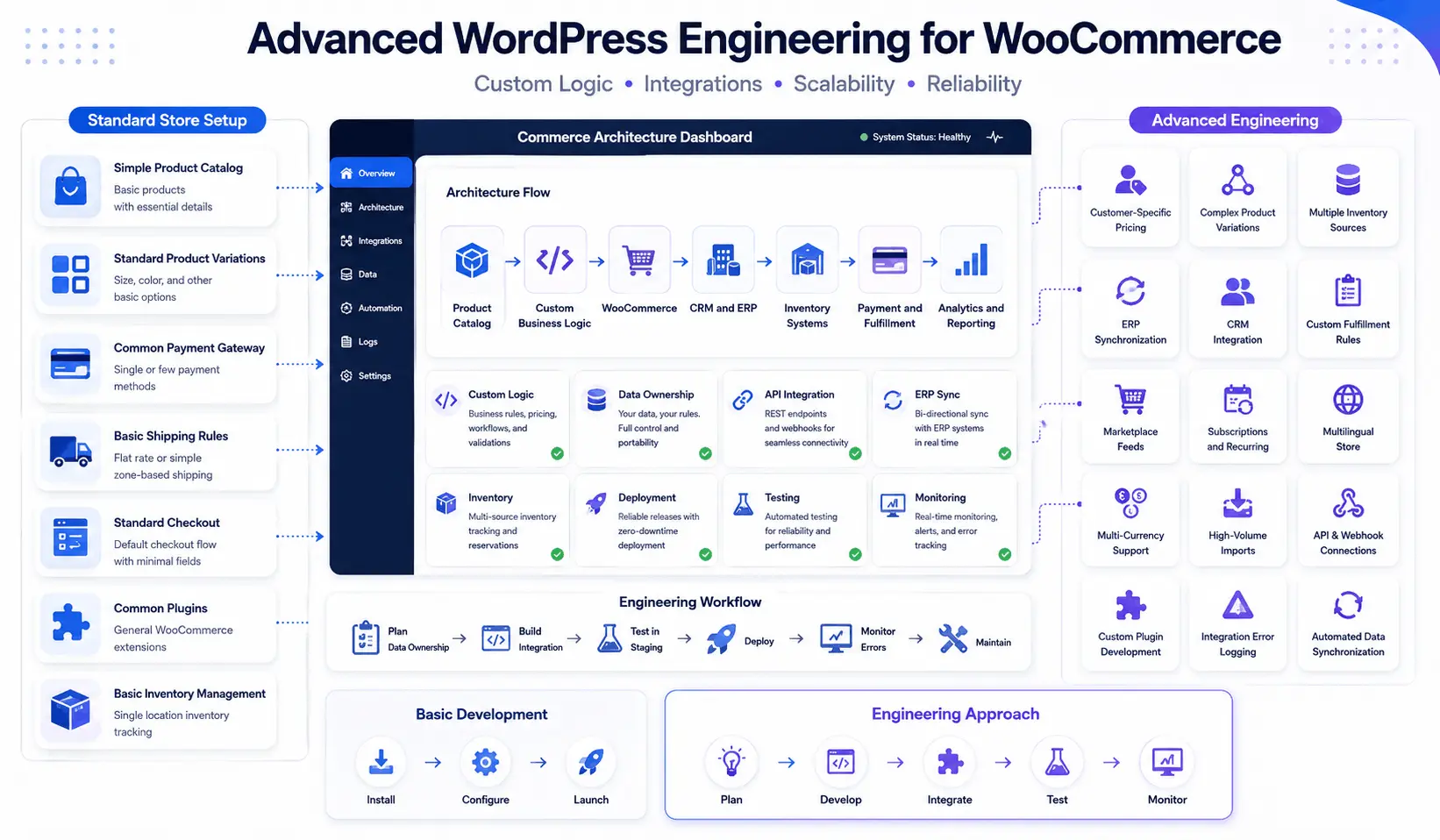
Chicago businesses may need deeper WooCommerce engineering when a store must support wholesale and retail customers, customer-specific pricing, complex product variations, local pickup, multiple inventory locations, subscriptions, multilingual content, marketplace feeds, or high-volume product imports.
FiliCode supports these requirements by planning how products, customers, orders, payments, inventory, and external systems exchange data. For teams comparing WordPress development solutions in Chicago, this means looking beyond theme installation and reviewing data ownership, plugin dependencies, API failure handling, staging, testing, deployment, and long-term maintenance. Our WordPress development Chicago service covers broader architecture and custom functionality that may sit outside the visible storefront.
Businesses searching for a WooCommerce developer near me should also consider whether the project needs one specialist or a coordinated team covering design, development, integrations, testing, and support. For focused improvements, troubleshooting, or contained development tasks, our freelance WooCommerce development options may provide a practical engagement model.
A responsible agency should make scope, assumptions, dependencies, testing responsibilities, ownership, and support boundaries visible. It should also explain where standard WooCommerce behavior is being used and where custom code creates an ongoing maintenance obligation.
Deliverables, exclusions, content responsibilities, integrations, migration work, review rounds, and support terms should be documented.
Customizations should be isolated, documented, versioned, and tested against relevant updates rather than hidden in fragile overrides.
Testing should cover successful orders and relevant failure states, including declined payments, missing stock, invalid data, and integration delays.
Analytics should distinguish browsing, cart activity, checkout progress, purchases, refunds, and operational errors where measurement is possible.
PCI-DSS obligations depend on how card data is handled. Hosted payment fields and redirect-based gateways can reduce direct exposure, but they do not remove every merchant responsibility. Access control, software updates, backups, logging, and incident response still need practical ownership.
Plan a Safer Store BuildThe right technology stack depends on the catalog, transaction model, expected traffic, operational systems, and internal team. WooCommerce is an open-source ecommerce platform built on WordPress, but a reliable store also depends on compatible themes, carefully selected extensions, suitable hosting, secure payment configuration, and documented business workflows. Store owners can review the official WooCommerce documentation for platform guidance covering products, payments, shipping, taxes, migrations, and store management.
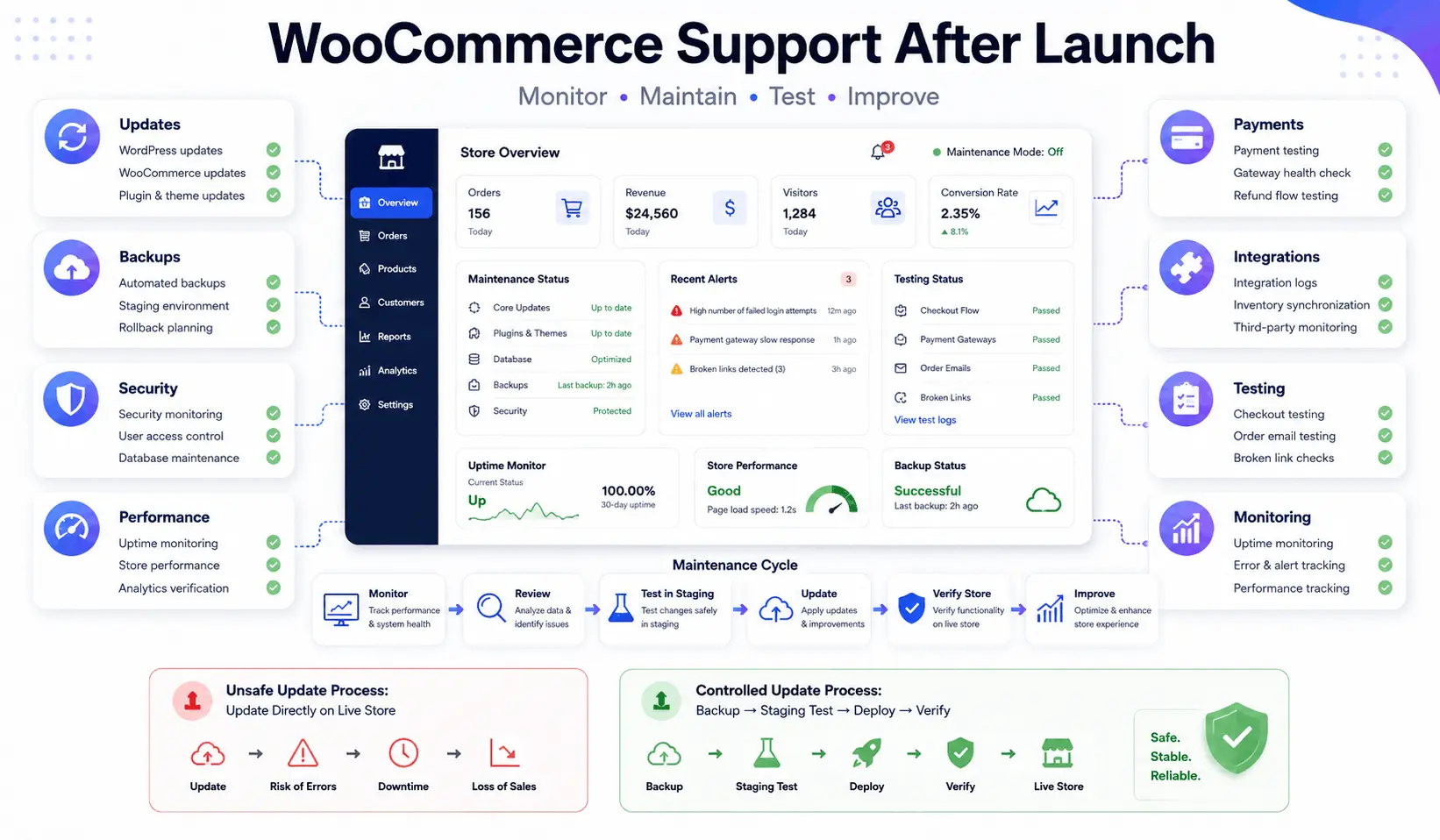
Launch changes the type of work rather than ending it. A live store may need WordPress, WooCommerce, theme, and plugin updates; backup checks; security reviews; performance monitoring; payment testing; integration logs; product data maintenance; and conversion improvements.
Updates should normally be reviewed in staging when they affect checkout, payments, taxes, shipping, subscriptions, or custom code. High-risk changes need a rollback path and a defined maintenance window. This is especially important when several external systems depend on order or inventory data.
FiliCode can scope ongoing support or broader WordPress development services for stores that need continuing engineering, feature work, technical troubleshooting, or carefully managed upgrades.
Share your current store or project brief, product count, customer types, payment and shipping requirements, integrations, content status, migration needs, launch goals, and known technical concerns. FiliCode will review the project fit and recommend a practical next step.