Strategy, UX, Development, Performance, and Support Built Around Real Business Goals
FiliCode is an Illinois web design company that plans, designs, develops, and supports websites around measurable business needs. We help small and mid-sized businesses, B2B teams, ecommerce brands, and growing organizations create responsive websites that are easier to use, easier to manage, and better prepared for search visibility, lead generation, and future growth.
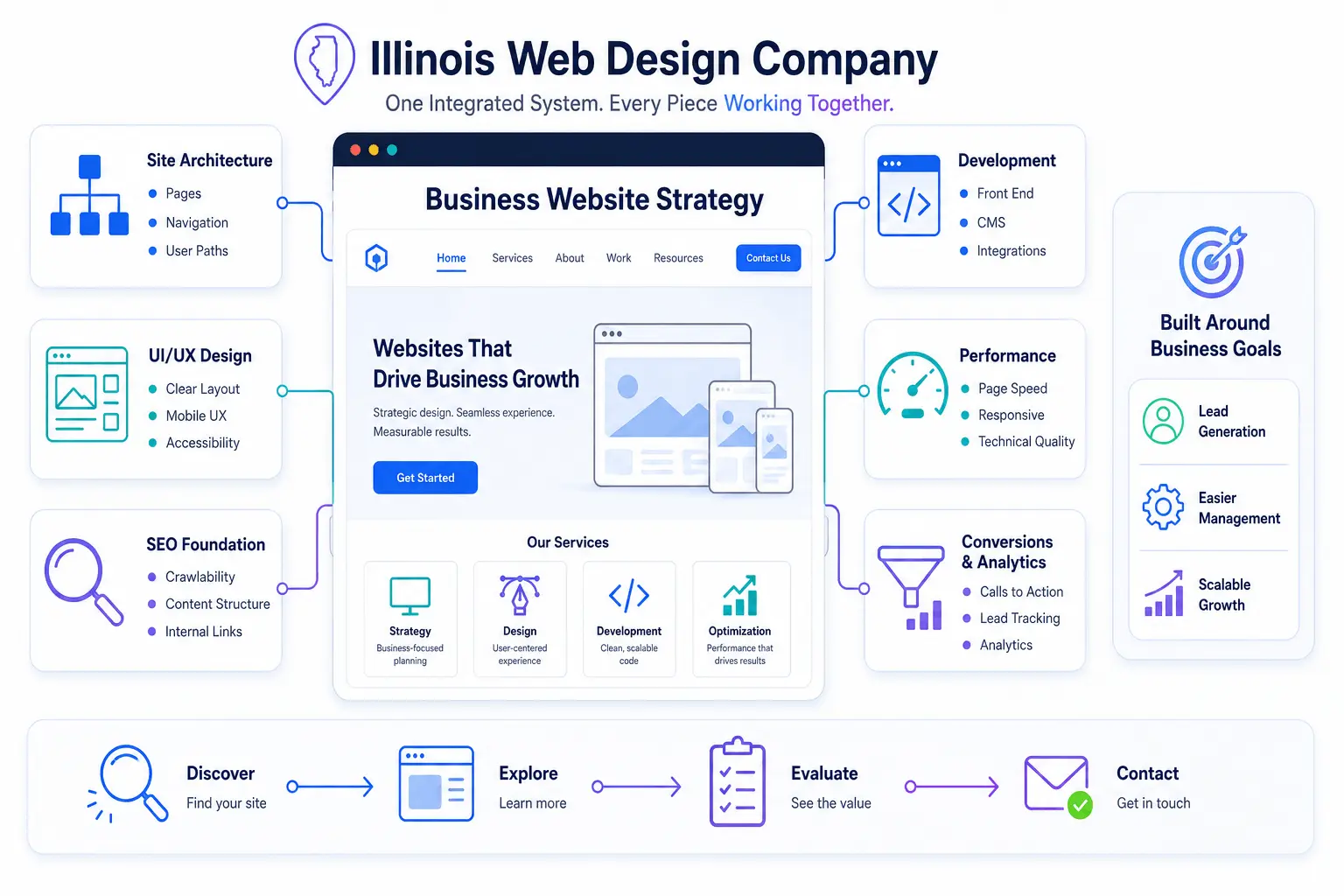
Plan Your Illinois WebsiteA professional web design partner should do more than make pages look polished. The work should connect site architecture, navigation, brand identity, content, mobile usability, accessibility, page speed, search engine optimization, calls to action, analytics, and the content management system into one coherent experience.
In practical terms, website design services combine discovery, information architecture, UI/UX design, front-end development, back-end development, testing, launch planning, and ongoing improvement. A strong website should help a visitor understand what you offer, decide whether it fits their needs, and take the next useful action without unnecessary friction.
FiliCode approaches website design and development as a business system rather than a collection of isolated pages. That means important decisions are tied to customer intent, operational requirements, content ownership, technical scalability, and the actions you actually want visitors to complete.
The right scope depends on your audience, sales process, content needs, platform, internal team, integrations, and long-term maintenance plan. FiliCode can combine the services below into a focused project rather than adding features that do not support the website's purpose.
Custom website design starts with content hierarchy, navigation structure, user journeys, calls to action, typography, color systems, and reusable page patterns. The goal is a distinctive interface that supports the brand while keeping decisions simple for visitors on desktop and mobile devices.
WordPress website design can give marketing teams practical control over pages, media, forms, and content without sacrificing structured development. For organizations focused on the Chicago market, see our WordPress development in Chicago capabilities.
WooCommerce web development, Shopify development, product architecture, checkout usability, payment integrations, analytics, and mobile-first design can be planned around how customers browse and buy. Ecommerce decisions should account for catalog size, operations, content workflows, shipping, and future integrations.
Wireframes and prototypes help resolve structure before development begins. Our UI and UX design services focus on clearer journeys, stronger calls to action, form usability, content prioritization, and conversion rate optimization without relying on manipulative design patterns.
Website redesign services can address confusing navigation, outdated templates, slow pages, weak mobile layouts, inconsistent components, migration risks, and technical debt. Performance work can include image optimization, code cleanup, caching strategy, page speed improvements, security and SSL checks, and third-party integration review.
Ongoing support can cover updates, backups, monitoring, content changes, Google Analytics setup, conversion events, hosting coordination, and iterative improvements. A maintainable website should make future changes safer and give your team useful reporting instead of leaving the site untouched after launch.
FiliCode uses a practical five-stage workflow we call the Clarity-to-Conversion Website Process. Each stage answers a different project question before the next layer of work becomes expensive to change.
We identify audiences, priority services or products, conversion actions, content gaps, platform needs, integrations, accessibility considerations, budget constraints, and launch dependencies.
Site architecture, page hierarchy, navigation, internal paths, landing page structure, and wireframes are organized before visual detail takes over the conversation.
Visual components, typography, color schemes, imagery, content modules, and responsive behavior are developed around the approved structure and brand identity.
Front-end and back-end development are followed by device testing, form checks, browser review, performance work, redirects where needed, accessibility checks, and analytics preparation.
After launch, real user behavior and conversion data can guide refinements to content, calls to action, landing pages, technical performance, and future feature priorities.
Website projects become harder to control when visual design starts before goals, content, integrations, and ownership are understood. A staged process makes decisions visible and gives stakeholders specific review points for structure, design, functionality, and launch readiness.
It also creates clearer project management. Instead of treating feedback as one large approval at the end, teams can review the decisions that belong to each phase. That helps protect the project timeline and makes scope changes easier to identify before they affect development.
Responsive behavior is planned as part of the system, not added after desktop screens are finished. The general concept of responsive web design is to adapt layouts to different devices and screen conditions; implementation still requires deliberate decisions about content priority, touch targets, navigation, images, and performance.
Start a Website Discovery CallIllinois businesses do not all compete in the same environment. Search demand, service areas, audience expectations, recruiting needs, local competition, and content depth can differ significantly between Chicago, suburban markets, central Illinois, and communities near the St. Louis metro area.
Competitive B2B, professional service, ecommerce, and multi-location websites often need deeper service architecture, strong proof points, fast mobile performance, and close alignment between website content and organic search strategy.
Local and regional businesses may need location-aware landing pages, clear service boundaries, strong lead forms, reviews or trust content, and CMS workflows that make ongoing updates practical for internal teams.
Organizations serving central Illinois can benefit from concise navigation, local relevance, accessible content, service-area clarity, and a scalable page system that supports expansion without rebuilding the site from scratch.
Businesses looking for web design in Columbia, IL often serve customers across both Illinois and the greater St. Louis region. That can change how service-area pages, local SEO, contact details, driving-market context, and paid or organic landing pages should be organized.
For companies whose customer base crosses the state line, FiliCode can coordinate the website strategy with our St. Louis web design services. The goal is not to duplicate near-identical location pages, but to build useful content around real market differences and customer needs.
Choosing a web design partner should come down to more than visual style or a list of features. Look for a team that can explain its decisions, show relevant work, define responsibilities clearly, and plan for the technical and marketing requirements your website will need after launch.
Review portfolio work or case studies that reflect the type of website you need. Ask what the team actually handled, what problems were addressed, and how design and development decisions supported the client's goals.
Pages, features, integrations, content responsibilities, revisions, testing, launch tasks, and ongoing support should be defined before development expands. Clear ownership reduces surprises and makes changes easier to manage.
SEO, accessibility, responsive behavior, analytics, redirects, page speed, security practices, forms, APIs, and third-party systems should be considered during planning rather than treated as unrelated tasks after launch.
A maintainable website should support future landing pages, content changes, integrations, performance improvements, conversion testing, and platform updates without forcing the business to rebuild every time requirements change.
FiliCode combines website planning with design, development, performance, and long-term maintainability. When organic search is an important acquisition channel, the project can also be coordinated with our Chicago SEO services so site architecture, content, technical implementation, and conversion paths support the same strategy.
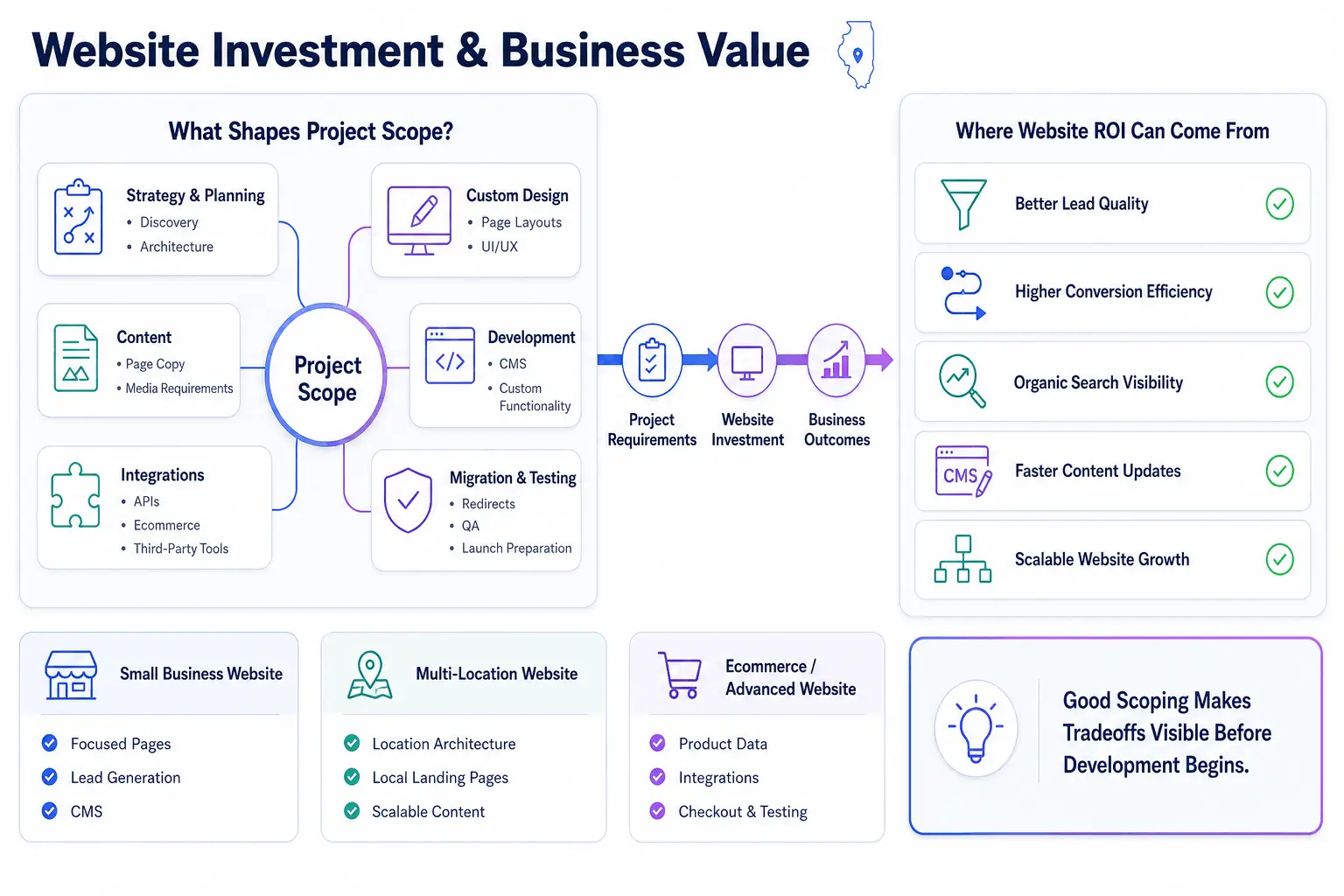
Web design pricing should reflect the amount of strategy, custom design, content work, development, integrations, migration, testing, and support required. A simple small business website and a multi-location lead generation platform should not be scoped the same way, and an ecommerce store with product data or third-party APIs introduces different development and quality-assurance needs.
ROI is also broader than visual appearance. A useful website can reduce friction in inquiries, improve lead quality, support organic traffic, make content updates faster, strengthen recruiting or sales conversations, and reduce the cost of correcting technical problems later. FiliCode discusses budget against the actual project requirements so tradeoffs are visible before work begins.
Discuss Scope and BudgetThese answers cover the practical questions businesses often need resolved before choosing web designers in Illinois or starting a website development project.
Share your current website, target customers, priority services or products, preferred platform, required integrations, content needs, timeline, and budget range. FiliCode can review the requirements and recommend a practical starting scope for website development in Illinois.