Figma Redesign, WordPress, Elementor, Custom Search, and Medical Directory Development
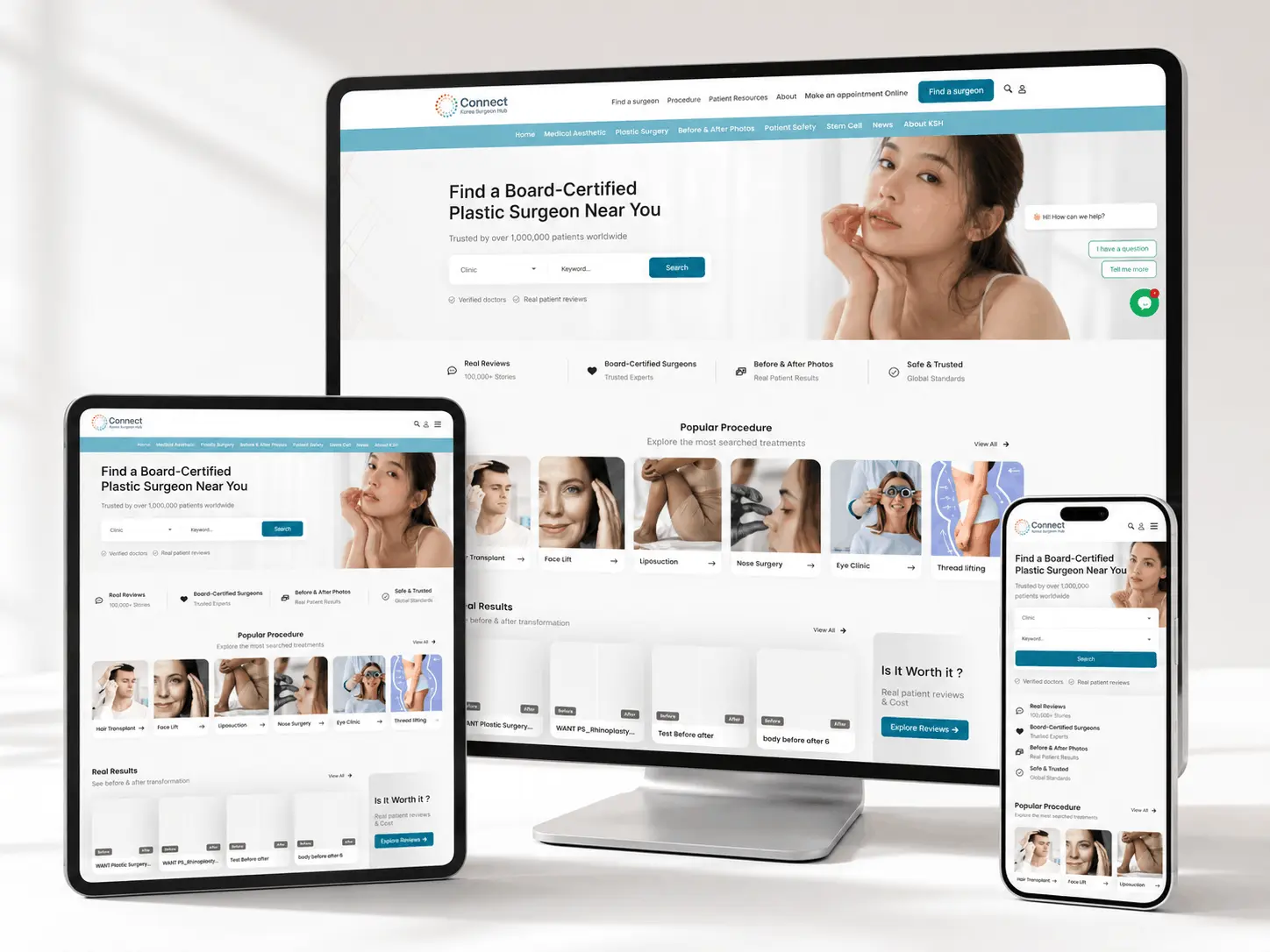
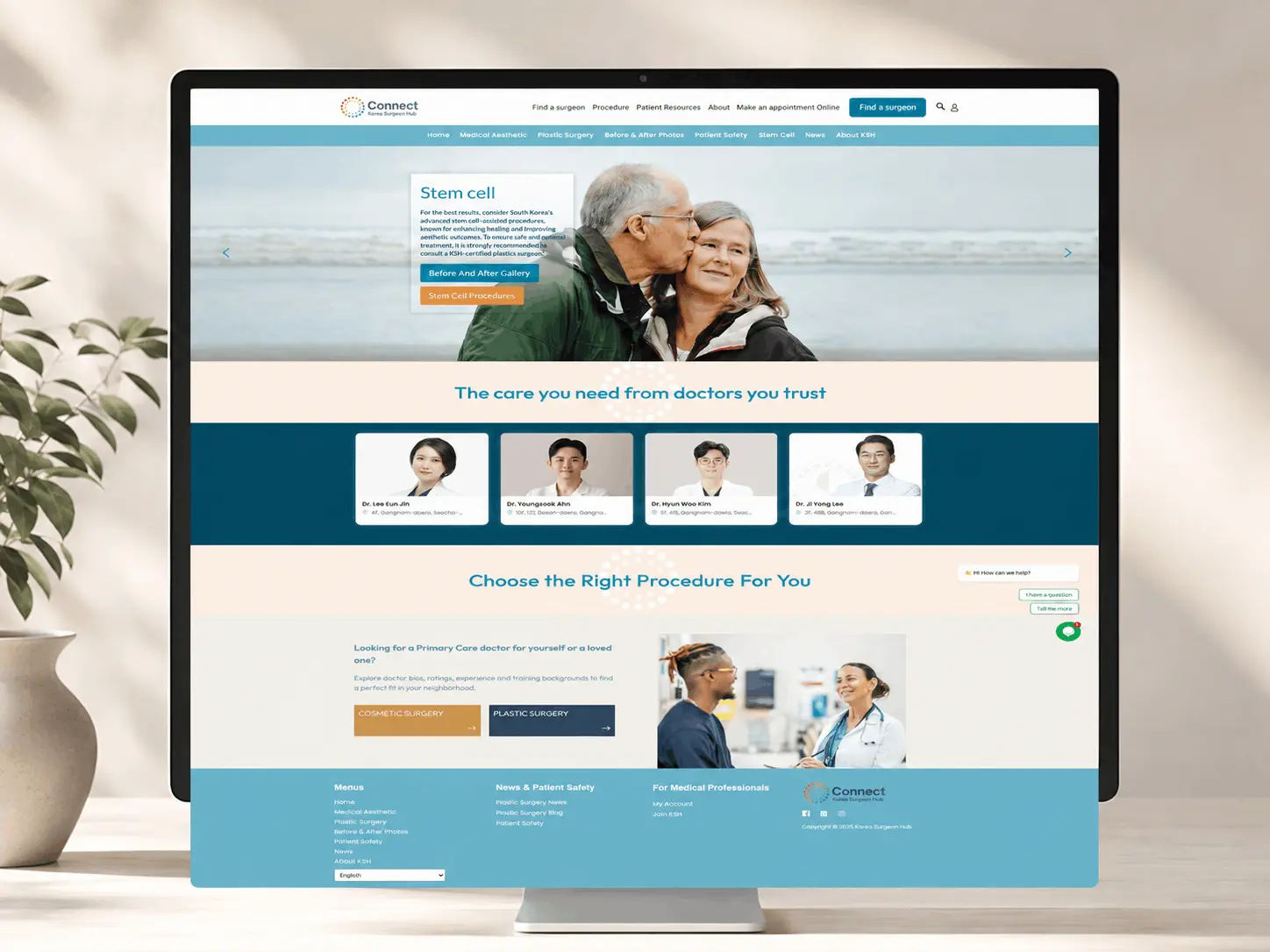
This medical website design case study explains how FiliCode converted an approved Figma direction into a responsive WordPress platform for Korea Surgeon Hub. The website connects international visitors with procedures, surgeons, doctors, clinics, patient-safety information, reviews, and detailed enquiry journeys. Elementor was combined with custom HTML, CSS, JavaScript, and WordPress development to support a large, content-rich medical directory.
Visit Korea Surgeon Hub
Korea Surgeon Hub is more than a clinic brochure. It is a medical discovery platform where visitors can begin with a procedure, search for a surgeon, compare clinics, review provider details, read patient-safety content, or submit an enquiry for international-patient support.
The redesign needed to make these routes feel connected. A visitor researching a treatment should be able to reach relevant providers, while a visitor viewing a clinic or surgeon should be able to understand specialties, location details, available procedures, reviews, and the next action. The design also needed to accommodate a larger-than-normal volume of content without making navigation feel crowded.
FiliCode retained WordPress as the content management system and implemented the approved layouts through Elementor and custom development. The project brought together information architecture, reusable page components, responsive interfaces, searchable listings, profile templates, calls to action, and enquiry forms. Similar projects can begin with our website design and development services.
The work combined visual redesign, medical content architecture, WordPress implementation, directory functionality, responsive behavior, and conversion-focused patient journeys.
The approved visual direction was translated into a consistent interface for directory, profile, procedure, safety, and enquiry pages.
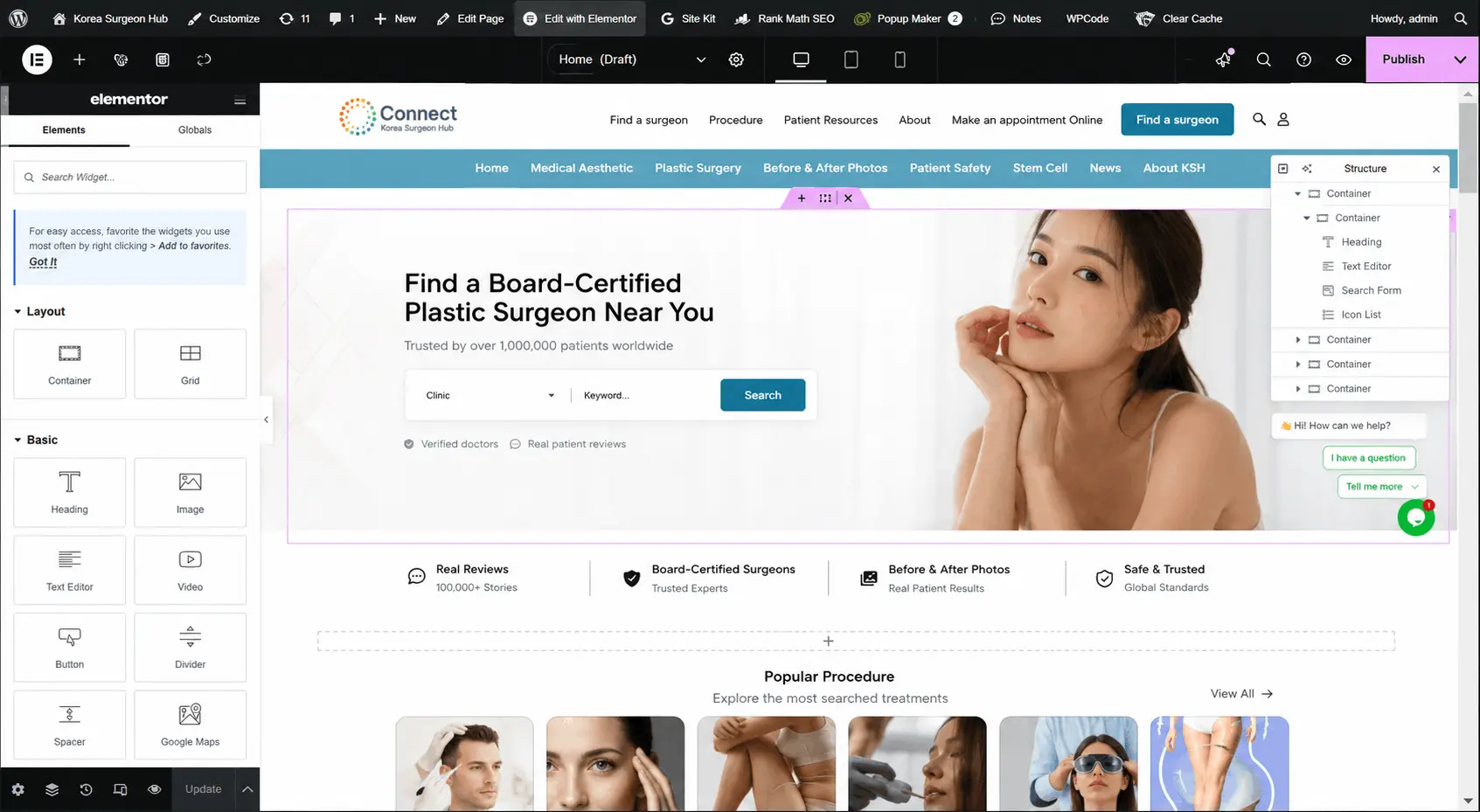
Editable Elementor sections were combined with theme templates and custom code where standard widgets could not support the required layout or behavior.
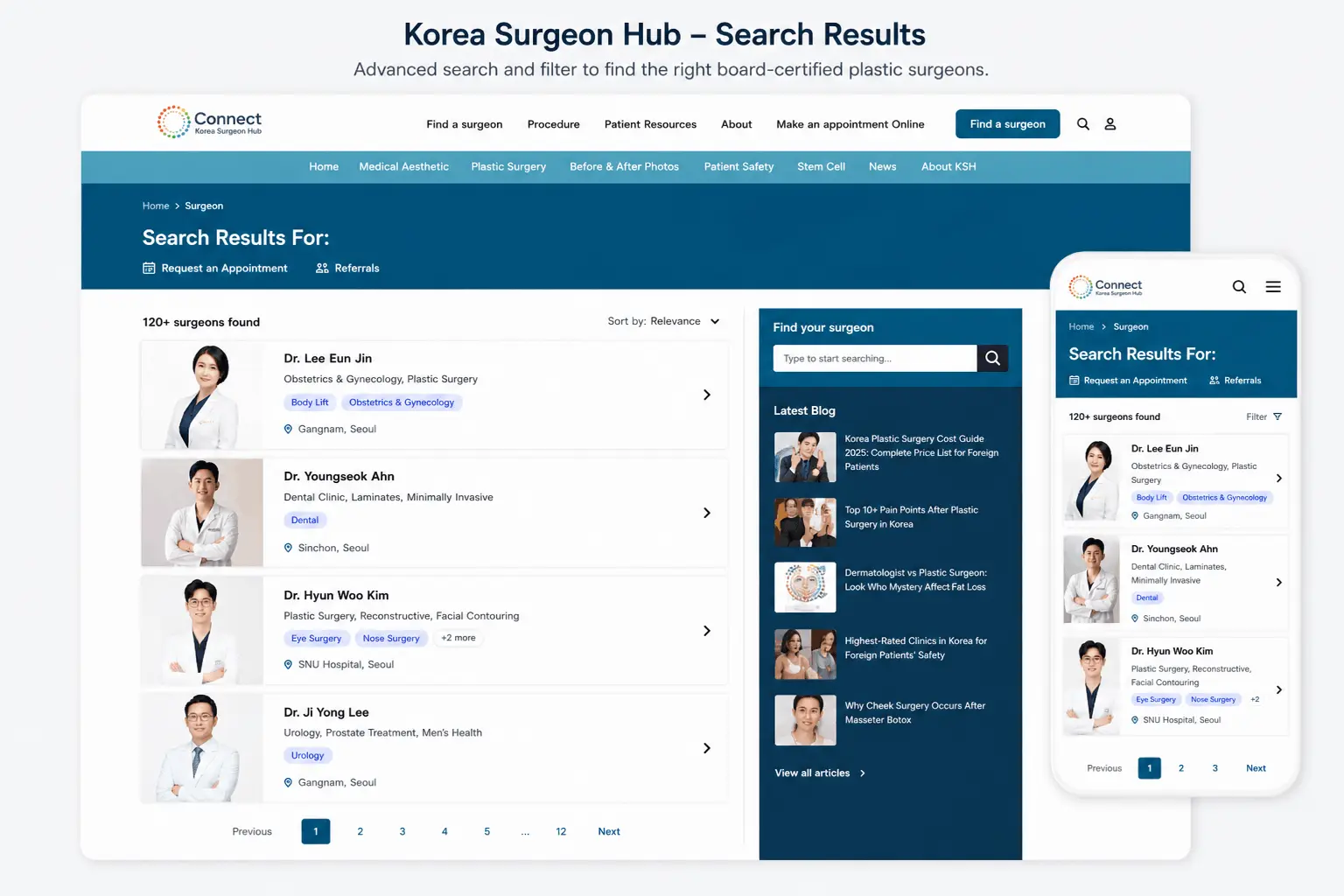
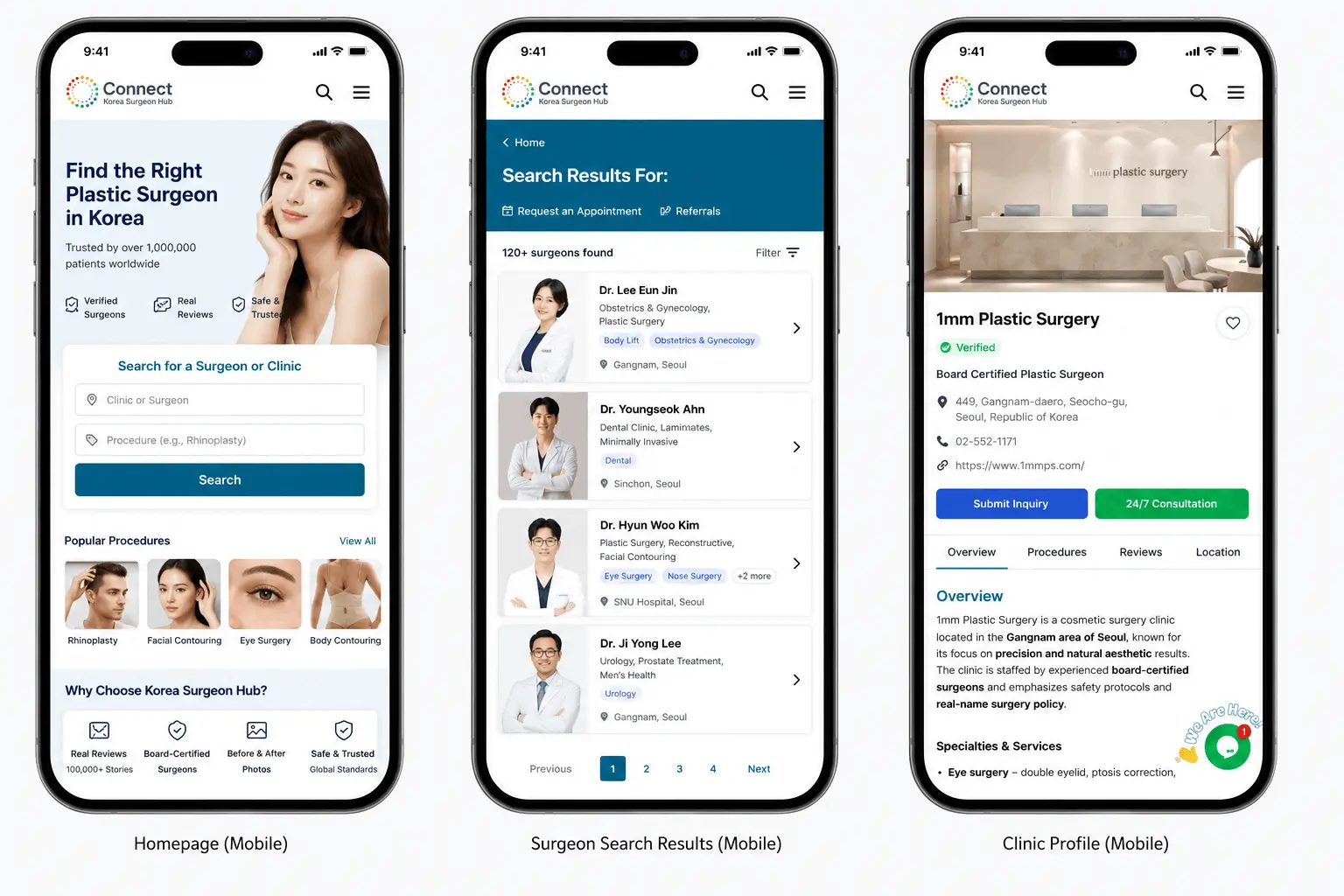
Search and listing interfaces help visitors move from broad discovery toward individual surgeon, doctor, and clinic profiles.
Procedure pages connect educational content with relevant clinics, providers, related categories, and enquiry opportunities.
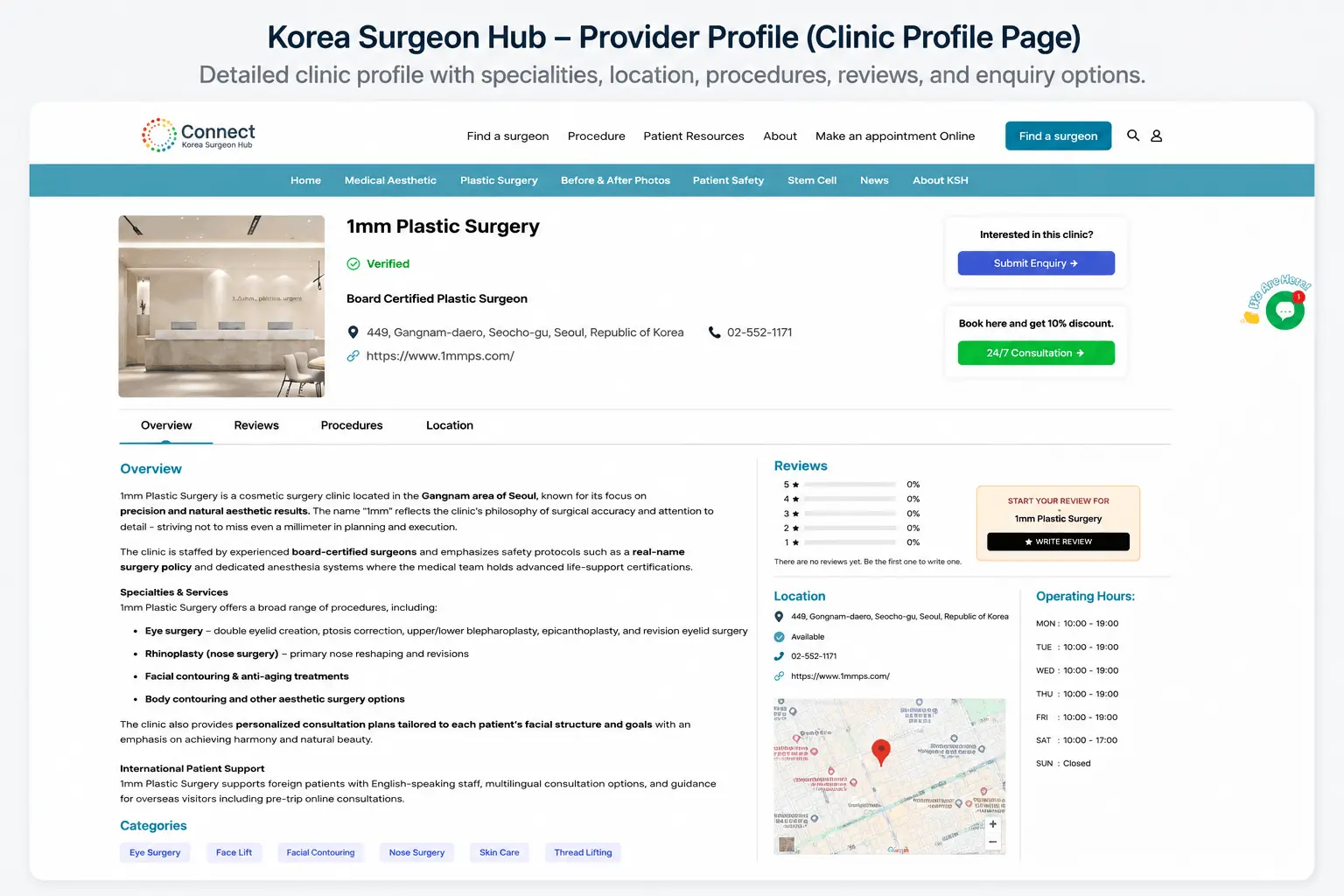
Structured templates present provider specialties, qualifications, locations, contact information, clinic hours, reviews, and calls to action consistently.
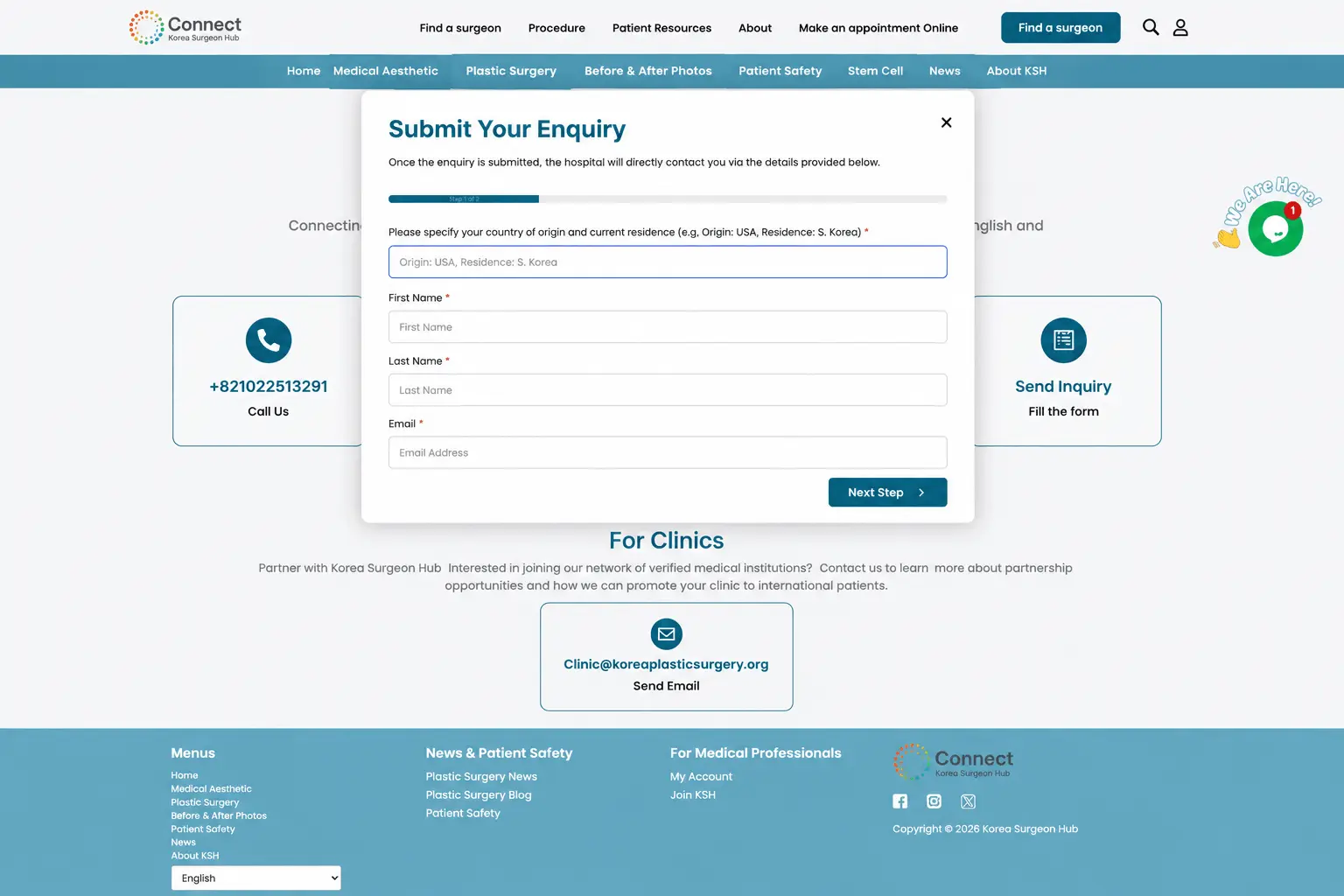
Calls to action and detailed forms support visitors who need treatment guidance, provider introductions, or travel-related assistance.
Visible headings, crawlable profile content, descriptive links, readable URLs, and image descriptions support long-term content discovery.
A typical medical practice website may focus on one organization, a limited group of providers, and a small set of services. Korea Surgeon Hub contains many connected entities: procedure categories, individual treatments, surgeons, doctors, clinics, reviews, patient-safety resources, editorial content, locations, and international enquiries.
These entities needed predictable relationships. Search results had to lead into useful profiles. Procedure content needed to surface relevant providers. Clinic pages needed space for specialties, detailed overviews, operating information, reviews, and conversion actions. Optional data also had to be handled without leaving broken or confusing layouts.
The approved design could not be treated as static artwork. Real titles, long medical descriptions, changing listings, mobile controls, forms, and administrator-managed content had to fit the components. Our UI and UX design approach connects interface decisions to actual content and user tasks.
This comparison describes completed design and development changes. It does not present unverified claims about rankings, enquiries, or patient conversions.
Different medical concepts needed a more consistent hierarchy and visual relationship across the platform.
Visitors could begin with a procedure, provider, clinic, safety question, or general research topic.
Some layouts and interactions required more control than standard Elementor components could provide.
Typography, cards, content blocks, calls to action, and page spacing follow the approved Figma direction.
Procedures, provider listings, profiles, safety content, and enquiries work as linked routes.
Editable page sections are supported by HTML, CSS, JavaScript, and WordPress template work where required.
The project followed a four-stage process that kept design, content relationships, search behavior, and future administration connected.
We mapped the homepage, search results, procedures, surgeon profiles, clinic profiles, safety resources, news, contact, and enquiry pages.
Content routes were planned around the connections between treatments, providers, locations, and user actions.
Approved cards, content sections, profile blocks, navigation elements, and calls to action were translated into responsive layouts.
Elementor was used where visual editing was practical, with custom template and front-end work for specialized requirements.
Provider cards, search values, profile links, empty states, and responsive controls were considered as one flow.
Surgeon and clinic templates organize credentials, specialties, locations, procedures, reviews, and enquiry actions.
Navigation, listing search, profiles, procedure browsing, forms, sliders, accordions, and mobile layouts were reviewed.
Heading order, internal links, visible text, image descriptions, form behavior, and content fallbacks were checked before release.
This implementation approach builds on FiliCode’s broader WordPress experience. Our Patronus Clearance headless WordPress case study shows how we handle more deeply decoupled content delivery and custom technical architecture.
Medical directory search must do more than display a keyword field. The search controls, selected values, result cards, profile links, and displayed information must remain synchronized so visitors understand what they are viewing.
Korea Surgeon Hub gives users a route from broad provider discovery to detailed surgeon and clinic information. Results present concise details for scanning, while profiles provide the depth required for further research. Procedure pages also introduce relevant clinics, creating another route into the directory.
On smaller screens, controls and cards need large targets, readable labels, and an uncluttered sequence. The goal is not to expose every possible option at once, but to help visitors make one clear decision at each stage. This single-minded user journey can reduce confusion and support more qualified enquiries.
A useful provider profile answers practical questions without forcing the visitor to search across several pages. Korea Surgeon Hub profiles can accommodate provider names, qualification or verification information, areas of expertise, clinic descriptions, addresses, telephone details, websites, operating hours, reviews, procedures, and enquiry actions.
Consistency matters because visitors compare pages. Repeating the same content hierarchy helps them find important details more quickly, while flexible sections allow clinics and individual surgeons to present different amounts of information. Clear headings and scannable groups also make long profiles easier to understand.
The redesigned template system follows the same principle used in FiliCode’s
Find Mentor directory redesign,
where searchable listings and detailed profiles had to remain connected while the existing WordPress platform received a new interface.
Elementor gives content teams a practical interface for updating many page sections. A large medical directory, however, includes repeatable templates and interactive behavior that may not fit neatly inside standard builder widgets.
FiliCode used the builder for suitable content areas and custom development where tighter control was needed. This approach supports design accuracy, reusable profile structures, responsive behavior, search interfaces, and maintainable content entry without turning every page into a separate one-off build.
The WordPress layer remains responsible for organized content and administration, while the front end presents that content in the approved design. Organizations planning similar integrations can review our WordPress development services.
Appointment or enquiry actions should be visible at the point where a visitor has enough context to act. Korea Surgeon Hub places calls to action around provider and clinic research, while the enquiry journey collects the information needed for follow-up.
Long medical forms require careful grouping, readable labels, validation, consent information, and clear expectations about what happens after submission. The interface should request only information that supports the stated workflow and should not imply that a website form replaces professional medical assessment.
Trust also depends on patient-safety information, provider details, review context, secure delivery, and transparent contact routes. Where analytics are available, our conversion optimisation services can evaluate form completion, search usage, profile engagement, and other agreed actions without relying on appearance alone.
These outcomes describe completed implementation work and avoid unsupported claims about traffic, rankings, bookings, or revenue.
The best medical website design is not defined by decoration alone. It creates a dependable relationship between accurate content, clear navigation, provider information, mobile usability, trust signals, forms, and the operational workflow behind every page.
A custom design can provide stronger control than generic medical website design templates, but it also needs reusable rules. Page families, optional content, image ratios, headings, calls to action, and administrator responsibilities should be documented so future updates remain consistent.
Ongoing technical ownership is equally important. WordPress core, plugins, Elementor, custom templates, forms, security, backups, and browser behavior change over time. FiliCode provides website maintenance and technical support for controlled updates, compatibility checks, fixes, and future improvements.
Tell FiliCode about your organization, medical specialties, locations, provider data, approved designs, search requirements, appointment or enquiry workflow, integrations, and content-management needs. We will review the scope and explain the most practical design and WordPress development approach.