







Contents
- Quick Summary: WooCommerce vs Shopify
- WooCommerce vs Shopify at a Glance
- What Is WooCommerce?
- What Is Shopify?
- WooCommerce vs Shopify Pricing
- WooCommerce Costs
- Shopify Costs
- Pricing Verdict: Which Is More Affordable?
- WooCommerce vs Shopify SEO
- WooCommerce SEO Advantages
- Shopify SEO Limitations
- SEO Verdict: Which Platform Is Better?
- WooCommerce vs Shopify for Beginners
- Shopify for Beginners
- WooCommerce for Beginners
- Ease of Use Verdict: Which Platform Is Easier?
- WooCommerce vs Shopify Customization
- WooCommerce Flexibility
- Shopify Customization
- Customization Verdict: Which Platform Offers More Flexibility?
- WooCommerce vs Shopify for Dropshipping
- WooCommerce Dropshipping
- Shopify Dropshipping
- Dropshipping Verdict: Which Platform Is Better?
- WooCommerce vs Shopify Security
- Shopify Security
- WooCommerce Security
- Security Verdict: Which Platform Is More Secure?
- WooCommerce vs Shopify Scalability
- Shopify Scalability
- WooCommerce Scalability
- Scalability Verdict: Which Platform Scales Better?
- WooCommerce vs Shopify Pros and Cons
- WooCommerce Pros
- WooCommerce Cons
- Shopify Pros
- Shopify Cons
- WooCommerce vs Shopify vs BigCommerce
- BigCommerce Advantages
- BigCommerce Limitations
- WooCommerce vs Shopify vs Squarespace
- Squarespace Works Best For
- Limitations
- WooCommerce vs Shopify vs Magento
- Magento Advantages
- Magento Challenges
- Real World Use Cases: Which Platform Should You Choose?
- Choose WooCommerce If You Want
- Choose Shopify If You Want
- Final Verdict: WooCommerce vs Shopify 2026
- FAQs
- Which is better: Shopify vs WooCommerce?
- WooCommerce vs Shopify pricing: which is cheaper?
- WooCommerce vs Shopify for SEO: which platform wins?
- WooCommerce vs Shopify for dropshipping: which is better?
- Shopify vs WooCommerce which is more secure?
- WooCommerce vs Shopify which is more scalable?
- Shopify vs WooCommerce which is better for small businesses?
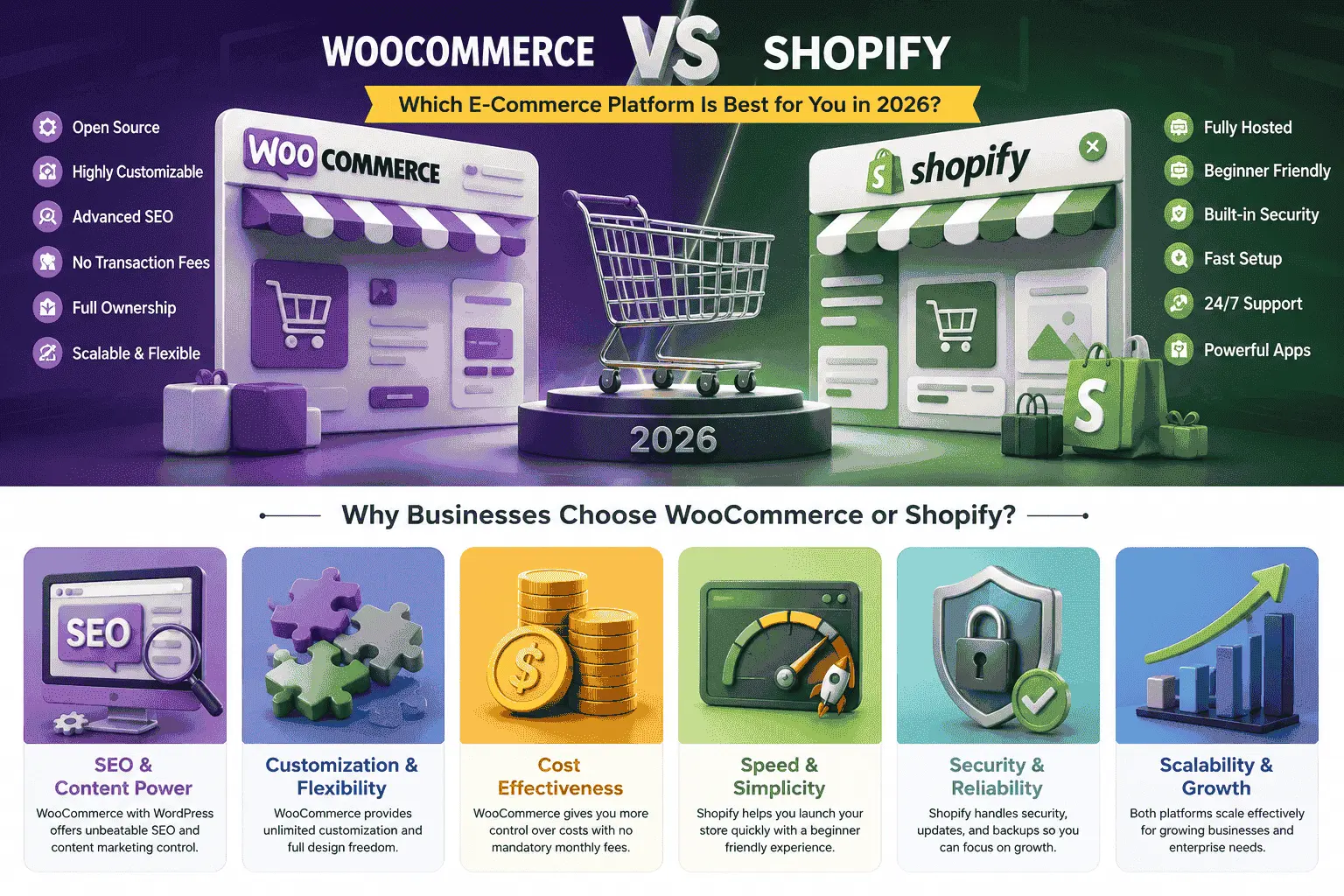
WooCommerce vs Shopify is one of the most important ecommerce decisions for online businesses in 2026. The right platform affects SEO, pricing, customization, security, scalability, user experience, and long-term operating costs.
In 2026, the WooCommerce vs Shopify debate continues to dominate the ecommerce industry because both platforms offer strong capabilities for building and scaling online stores. However, they serve different business needs.
Shopify focuses on simplicity, managed infrastructure, and beginner friendly ecommerce management. WooCommerce, on the other hand, provides complete flexibility, deeper customization, advanced SEO control, and full ownership over your ecommerce website.
Quick Summary: WooCommerce vs Shopify
- Shopify is better for beginners who want fast setup, managed hosting, built-in security, and easier day-to-day store management.
- WooCommerce is better for businesses that want more control over SEO, customization, content, integrations, and store infrastructure.
- Shopify usually provides a simpler launch process, while WooCommerce offers greater flexibility for custom workflows and long-term development needs.
- The best choice depends on your technical resources, budget structure, growth plans, SEO priorities, and need for customization.
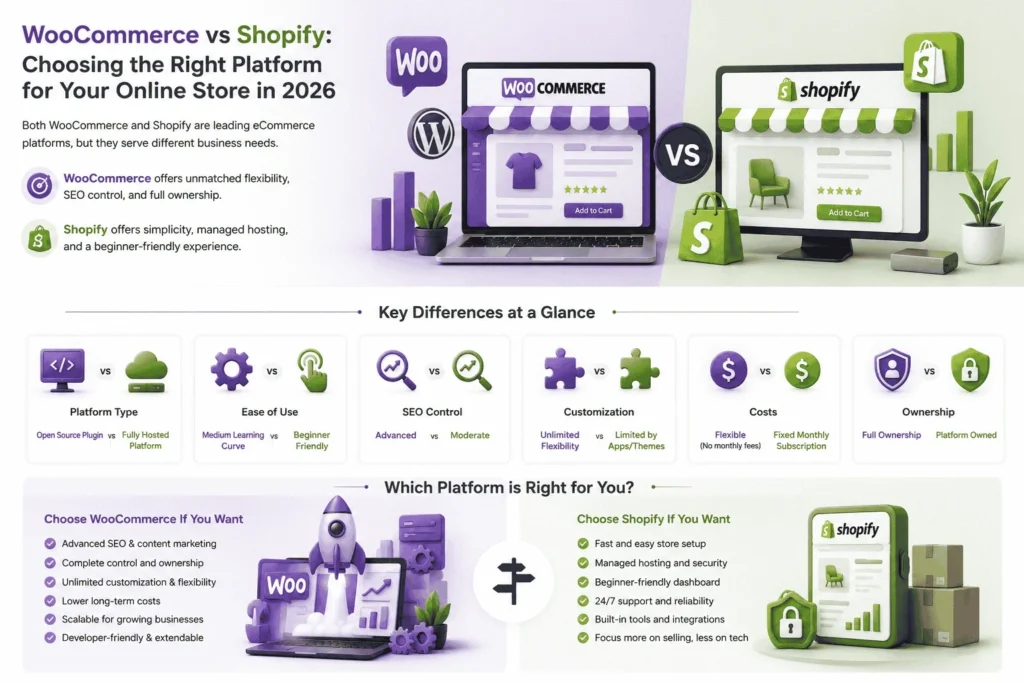
WooCommerce vs Shopify at a Glance
| Feature | WooCommerce | Shopify |
|---|---|---|
| Platform Type | Open source WordPress ecommerce plugin | Fully hosted ecommerce platform |
| Ease of Use | Medium learning curve | Beginner friendly |
| Hosting | Self hosted | Included |
| SEO Control | Advanced | Moderate |
| Customization | Unlimited flexibility | Limited by apps and themes |
| Monthly Fees | Flexible | Fixed subscription pricing |
| Transaction Fees | No platform transaction fees | Extra fees unless using Shopify Payments |
| Blogging Features | Excellent WordPress CMS integration | Basic blogging tools |
| Security Management | User managed | Fully managed |
| Scalability | Highly scalable | Highly scalable |
| Dropshipping | Flexible workflows | Easier setup |
| Best For | SEO focused and scalable stores | Fast launch and simplicity |
What Is WooCommerce?
WooCommerce is an open source ecommerce plugin built for WordPress. It transforms a standard WordPress website into a fully functional online store with advanced ecommerce functionality.
WooCommerce powers millions of ecommerce websites worldwide because it offers unmatched flexibility, customization, and control. Businesses can customize almost every aspect of their store including checkout optimization, payment gateways, product pages, inventory management, shipping workflows, and SEO structure.
One of WooCommerce’s biggest strengths is its deep integration with WordPress CMS. This gives businesses complete control over technical SEO, content marketing, blog architecture, schema markup, and internal linking strategies.
WooCommerce is especially popular among:
- SEO focused ecommerce brands
- Businesses wanting full website ownership
- Developers needing custom ecommerce functionality
- High growth ecommerce stores
- Dropshipping businesses with advanced workflows
- Companies requiring scalable ecommerce architecture
Because WooCommerce is open source, businesses can build highly customized ecommerce experiences tailored to their exact requirements. Many growing ecommerce brands work with experienced WooCommerce developers to create scalable online stores with custom functionality and optimized performance.
What Is Shopify?
Shopify is a fully hosted ecommerce platform designed to simplify online selling for businesses of all sizes.
Unlike WooCommerce, Shopify handles hosting, security, maintenance, software updates, PCI compliance, backups, and server infrastructure automatically. This allows store owners to focus more on selling products instead of managing technical operations.
Shopify is known for its beginner friendly dashboard, fast setup process, integrated payment gateways, and large app marketplace.
Popular Shopify features include:
- Managed ecommerce hosting
- Built in security
- Integrated payment processing
- Shopify apps marketplace
- Inventory management tools
- Multichannel selling
- Mobile commerce support
- Ecommerce automation tools
Shopify also offers enterprise solutions through Shopify Plus, which is designed for high volume ecommerce businesses requiring automation and advanced scaling support.
For businesses prioritizing simplicity and speed, Shopify remains one of the most popular ecommerce platforms available today.
WooCommerce vs Shopify Pricing
Pricing is often one of the biggest deciding factors when comparing ecommerce platforms.
WooCommerce Costs
WooCommerce itself is free to install, but businesses still need to pay for:
- Hosting
- Domain registration
- Premium themes
- Security plugins
- Backup tools
- Email services
- Developer support
- Premium WooCommerce plugins
The advantage is flexibility. Businesses only pay for the tools and services they actually need.
For many ecommerce stores, WooCommerce can become more cost effective over the long term because there are no mandatory monthly platform subscription fees.
Businesses also avoid platform lock in and maintain complete ownership over their store infrastructure.
Shopify Costs
Shopify uses a recurring subscription pricing model with plans such as:
- Shopify Basic
- Shopify Grow
- Shopify Advanced
- Shopify Plus
In addition to monthly fees, Shopify users often pay extra for:
- Premium Shopify apps
- Transaction fees
- Third party payment gateways
- Advanced reporting tools
- Additional staff accounts
Although Shopify simplifies ecommerce management, long term costs can increase significantly as businesses scale and require more advanced functionality.
Pricing Verdict: Which Is More Affordable?
WooCommerce is often more cost effective for businesses planning long term growth because it offers greater control over ecommerce costs.
Shopify is usually easier for beginners because hosting and maintenance are included, but recurring monthly costs can become expensive over time.
WooCommerce vs Shopify SEO
SEO is one of the biggest reasons many ecommerce businesses prefer WooCommerce.
WooCommerce SEO Advantages
Because WooCommerce runs on WordPress, businesses gain access to advanced SEO capabilities including:
- Full technical SEO control
- Advanced schema markup
- SEO plugins
- Custom URL structures
- Better internal linking
- Faster content publishing
- Blog optimization
- Rich metadata control
- Content marketing flexibility
- Improved site architecture
WooCommerce also supports advanced ecommerce SEO strategies such as category optimization, custom product schemas, and content silos.
For businesses relying heavily on organic traffic, WooCommerce provides stronger long term SEO advantages.
Shopify SEO Limitations
Shopify includes built in SEO tools, but there are still limitations compared to WooCommerce.
Common Shopify SEO limitations include:
- Restricted URL structures
- Less technical SEO flexibility
- Duplicate content issues
- Limited blogging capabilities
- Reduced metadata customization
While Shopify SEO performs well for smaller ecommerce stores, advanced SEO focused businesses often find WooCommerce more scalable for organic growth.
SEO Verdict: Which Platform Is Better?
For businesses focused on content marketing, technical SEO, and long term organic traffic growth, WooCommerce is usually the stronger ecommerce platform.
WooCommerce vs Shopify for Beginners
Ease of use matters, especially for first time store owners.
Shopify for Beginners
Shopify is designed specifically for beginners and non technical users.
Benefits include:
- Fast setup
- Beginner friendly dashboard
- Drag and drop customization
- Managed updates
- Simple onboarding
- Built in ecommerce tools
- Centralized customer support
Most businesses can launch a Shopify store within a few hours.
WooCommerce for Beginners
WooCommerce has a steeper learning curve because users manage:
- Hosting setup
- Security configuration
- Plugin management
- Website optimization
- Performance maintenance
However, WooCommerce offers significantly more flexibility and ownership once users become comfortable with the platform.
Ease of Use Verdict: Which Platform Is Easier?
Shopify clearly wins for ease of use and beginner friendliness.
WooCommerce is better suited for businesses wanting advanced customization and scalability.
WooCommerce vs Shopify Customization
Customization is one of the biggest differences between these platforms.
WooCommerce Flexibility
WooCommerce allows nearly unlimited customization including:
- Custom checkout optimization
- API integrations
- Unique product structures
- Advanced payment gateways
- Custom ecommerce workflows
- Dynamic pricing systems
- Custom shipping rules
- Plugin based scalability
- Headless ecommerce development
WooCommerce is especially attractive for businesses requiring custom ecommerce functionality or specialized workflows.
Shopify Customization
Shopify offers customization through themes and apps, but deeper modifications can become restrictive.
Many advanced features require third party apps, which can increase recurring costs.
For standard ecommerce stores, Shopify customization is usually sufficient. However, businesses needing highly customized ecommerce solutions often prefer WooCommerce.
Customization Verdict: Which Platform Offers More Flexibility?
WooCommerce is the clear winner for ecommerce customization and developer friendly scalability.
WooCommerce vs Shopify for Dropshipping
Dropshipping remains one of the fastest growing ecommerce business models.
WooCommerce Dropshipping
WooCommerce supports advanced dropshipping workflows through plugins and supplier integrations.
Benefits include:
- Flexible supplier management
- Lower scaling costs
- Full customer data ownership
- Better SEO opportunities
- Unlimited product structures
- Greater workflow customization
WooCommerce is often preferred by advanced dropshipping brands focused on long term scaling.
Shopify Dropshipping
Shopify is extremely popular among beginner dropshipping stores because setup is simpler.
Popular Shopify dropshipping apps include:
- DSers
- AutoDS
- Zendrop
Benefits include:
- Fast product importing
- Easy fulfillment management
- Simplified inventory synchronization
- Beginner friendly setup
However, app dependency can increase operating costs significantly.
Dropshipping Verdict: Which Platform Is Better?
Shopify is ideal for beginners wanting fast setup.
WooCommerce is better for businesses wanting more control, lower scaling costs, and stronger SEO opportunities.
WooCommerce vs Shopify Security
Security is essential for every ecommerce business.
Shopify Security
Shopify manages:
- SSL certificates
- PCI compliance
- Security updates
- Platform maintenance
- Managed platform infrastructure
- Server monitoring
This reduces technical responsibility for store owners.
WooCommerce Security
WooCommerce security depends on:
- Hosting quality
- Plugin management
- Website maintenance
- Firewall configuration
- Backup systems
With proper optimization and maintenance, WooCommerce can be highly secure. Many businesses work with specialized WooCommerce developers to maintain strong ecommerce security standards and optimize website performance.
Security Verdict: Which Platform Is More Secure?
Shopify is easier for non technical users because security is managed automatically.
WooCommerce offers strong security as well, but requires proper management and optimization.
WooCommerce vs Shopify Scalability
Scalability matters for growing ecommerce businesses.
Shopify Scalability
Shopify scales efficiently because infrastructure is fully managed.
Benefits include:
- High uptime
- Automatic scaling
- Enterprise support
- Simplified server management
- Shopify Plus enterprise features
WooCommerce Scalability
WooCommerce scalability depends heavily on hosting quality and development optimization.
With the right infrastructure, WooCommerce can support:
- Large product catalogs
- Enterprise ecommerce operations
- Multichannel selling
- High traffic websites
- International ecommerce stores
WooCommerce also provides greater flexibility for custom enterprise workflows.
Scalability Verdict: Which Platform Scales Better?
Both platforms scale effectively.
Shopify offers easier infrastructure management, while WooCommerce provides greater flexibility and customization at scale.
WooCommerce vs Shopify Pros and Cons
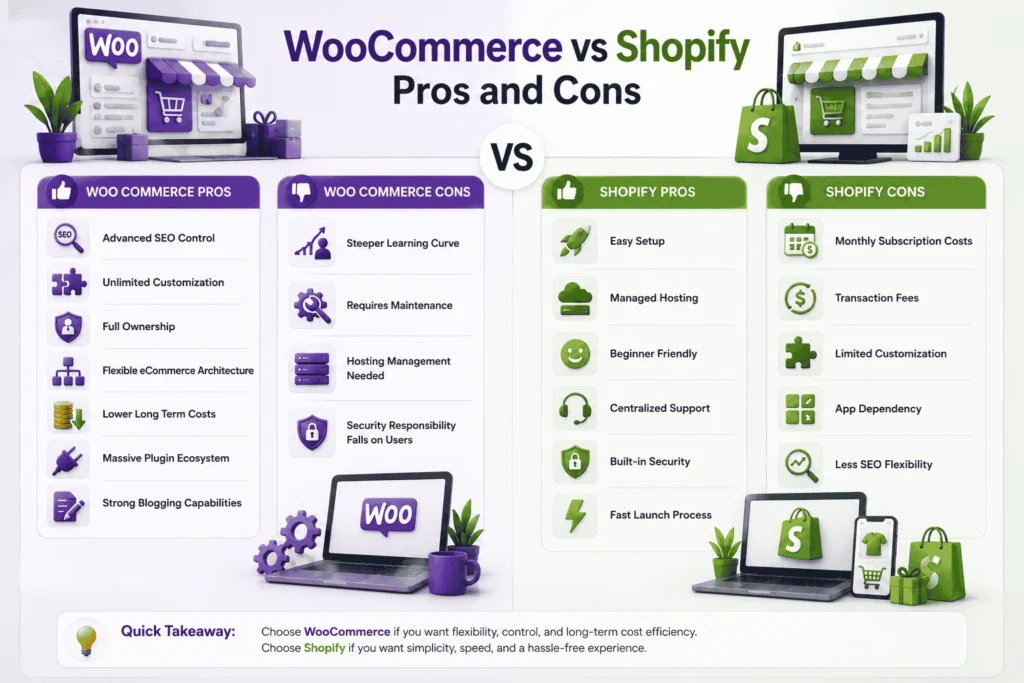
WooCommerce Pros
- Advanced SEO control
- Unlimited customization
- Full ownership
- Flexible ecommerce architecture
- Lower long term costs
- Massive plugin ecosystem
- Strong blogging capabilities
WooCommerce Cons
- Steeper learning curve
- Requires maintenance
- Hosting management needed
- Security responsibility falls on users
Shopify Pros
- Easy setup
- Managed hosting
- Beginner friendly
- Centralized support
- Built in security
- Fast launch process
Shopify Cons
- Monthly subscription costs
- Transaction fees
- Limited customization
- App dependency
- Less SEO flexibility
WooCommerce vs Shopify vs BigCommerce
BigCommerce is another popular ecommerce platform often compared with WooCommerce and Shopify.
BigCommerce Advantages
- Strong enterprise features
- Built in ecommerce tools
- Multichannel selling
- Good scalability
BigCommerce Limitations
- Smaller ecosystem
- Less flexibility than WooCommerce
- Higher costs for advanced features
For businesses prioritizing SEO, customization, and ownership, WooCommerce often remains the preferred solution.
WooCommerce vs Shopify vs Squarespace
Squarespace is popular among creators and visually focused businesses.
Squarespace Works Best For
- Portfolio websites
- Creators
- Small stores
- Simple ecommerce businesses
Limitations
Compared to WooCommerce and Shopify, Squarespace offers:
- Fewer ecommerce integrations
- Limited scalability
- Reduced customization
- Less advanced ecommerce tools
For serious ecommerce growth, WooCommerce and Shopify remain stronger choices.
WooCommerce vs Shopify vs Magento
Magento is designed for enterprise ecommerce businesses.
Magento Advantages
- Advanced enterprise customization
- Large scale catalog management
- B2B ecommerce functionality
Magento Challenges
- High development costs
- Complex infrastructure
- Technical expertise required
WooCommerce often provides a better balance between affordability, flexibility, SEO, and scalability for most ecommerce businesses.
Real World Use Cases: Which Platform Should You Choose?
Choose WooCommerce If You Want
- Advanced SEO capabilities
- Complete website ownership
- Flexible ecommerce architecture
- Strong content marketing integration
- Lower long term costs
- Advanced customization
- Better blogging functionality
- Scalable custom ecommerce development
Choose Shopify If You Want
- Fast store setup
- Beginner friendly management
- Managed hosting
- Less technical responsibility
- Centralized support
- Simplified ecommerce operations
Final Verdict: WooCommerce vs Shopify 2026
There is no universal winner in the WooCommerce vs Shopify comparison because the right ecommerce platform depends on your business goals, technical requirements, and long term growth strategy.
Shopify is an excellent choice for businesses wanting simplicity, faster setup, and managed infrastructure.
WooCommerce is often the stronger option for businesses focused on SEO, scalability, customization, content marketing, and long term ecommerce growth.
Companies planning custom ecommerce functionality, advanced SEO strategies, and scalable online stores frequently work with professional WooCommerce experts to build optimized ecommerce experiences tailored to their business model.
FAQs
Which is better: Shopify vs WooCommerce?
WooCommerce is generally better for businesses focused on SEO, customization, scalability, and long term flexibility. Shopify is better for beginners wanting fast setup, managed hosting, and easier ecommerce management.
WooCommerce vs Shopify pricing: which is cheaper?
WooCommerce is often cheaper long term because businesses control hosting, plugins, and infrastructure costs. Shopify uses recurring monthly subscription pricing and additional app costs that can increase as stores grow.
WooCommerce vs Shopify for SEO: which platform wins?
WooCommerce usually performs better for ecommerce SEO because WordPress provides advanced control over technical SEO, content optimization, metadata, schema markup, and internal linking strategies.
WooCommerce vs Shopify for dropshipping: which is better?
Shopify is easier for beginner dropshipping stores because setup and automation are simplified. WooCommerce offers more flexibility, lower scaling costs, and stronger SEO opportunities for advanced dropshipping businesses.
Shopify vs WooCommerce which is more secure?
Shopify manages security automatically including SSL certificates, PCI compliance, and updates. WooCommerce can also be highly secure when properly maintained with reliable hosting and optimized security practices.
WooCommerce vs Shopify which is more scalable?
Both platforms can scale successfully for enterprise ecommerce growth. Shopify simplifies infrastructure management, while WooCommerce offers greater customization and flexibility for complex ecommerce operations.
Shopify vs WooCommerce which is better for small businesses?
Small businesses wanting simplicity and faster launch times may prefer Shopify. Businesses focused on customization, SEO growth, and long term flexibility often choose WooCommerce.