






Contents
- Quick Summary: Why Is Web Design Important?
- Why Is Web Design Important Beyond Visual Appearance?
- Why Is Web Design Important When Choosing DIY or Professional Delivery?
- How Web Design Connects Frontend Experience to Architecture
- Why Is Web Design Important in Production Workflows?
- Why Is Responsive Web Design Important for Revenue?
- Why Is Accessibility Important in Web Design?
- Performance, SEO, and Conversion Share the Same Constraints
- Architecture Choices Change What Web Design Can Support
- WordPress and WooCommerce Design Must Account for Production Load
- Why Is Web Design Important for Scalability and Maintenance?
- When Does Custom Web Design Become Necessary?
- Frequently Asked Questions
- Why is web design important for a business?
- How much does professional web design cost?
- How long does a web design project take?
- Can a website scale without a redesign?
- What integrations affect web design complexity?
- What are the main migration risks?
- Why Is Web Design Important Before the Next Growth Stage?
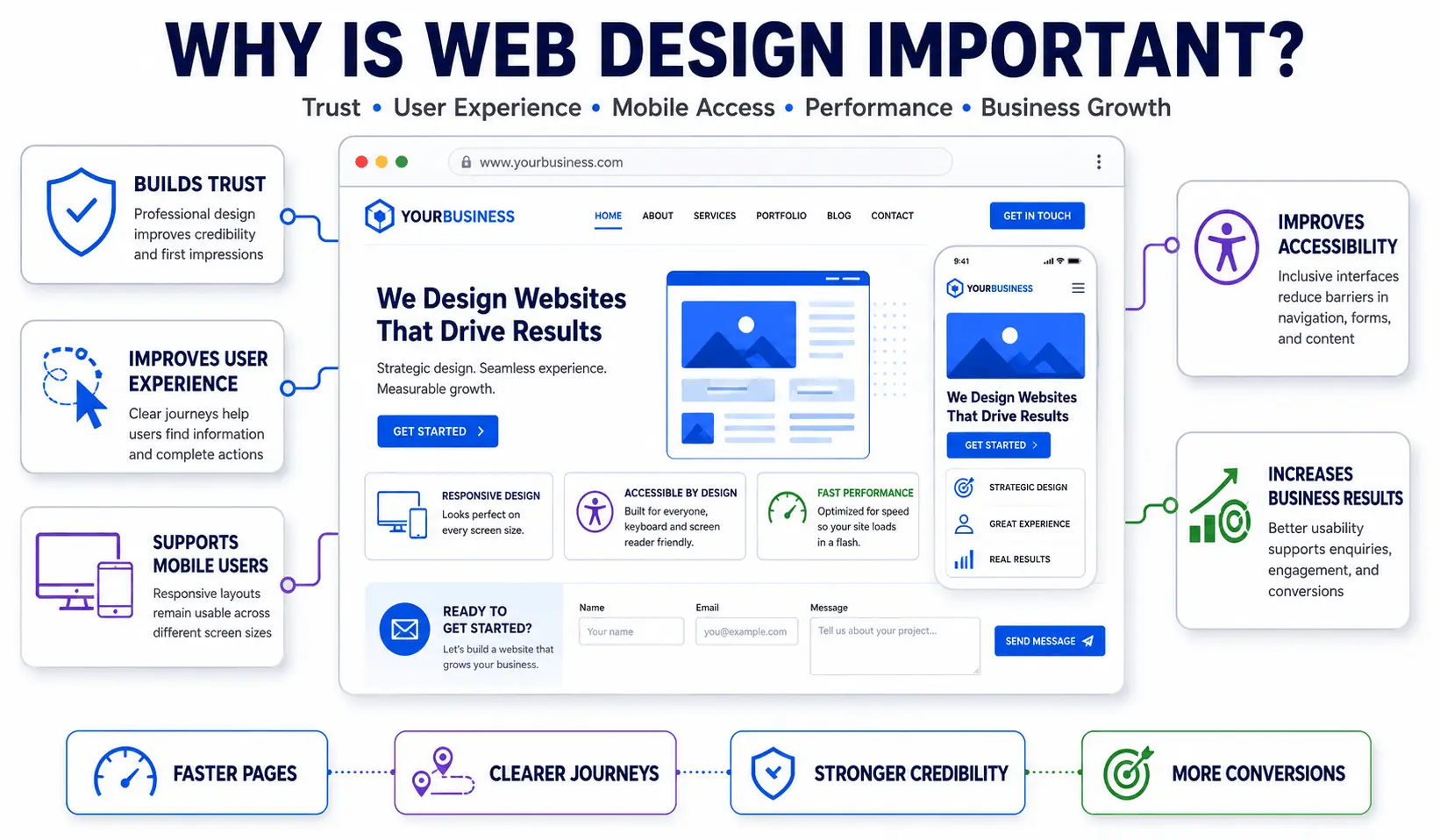
A website can look polished and still fail operationally. Slow pages, unclear navigation, inaccessible forms, fragile plugins, and disconnected lead workflows create friction long before a customer speaks to sales. So, why is web design important? Because design determines how people understand the offer, how reliably the platform responds, and how easily the business can maintain and scale the experience.
Good web design is not decoration applied after development. For teams asking, “why is web design important?”, the answer is coordination: user experience, information architecture, responsive behavior, content hierarchy, accessibility, performance, security, and conversion paths. When those parts work together, the website becomes a dependable operating system for marketing, sales, support, and customer trust.
Quick Summary: Why Is Web Design Important?
- Web design shapes first impressions, but its larger value is reducing uncertainty across navigation, forms, content, and calls-to-action.
- Responsive design protects revenue by keeping journeys usable across mobile, tablet, and desktop devices.
- Accessibility improves usability for more people and reduces avoidable barriers in forms, menus, media, and content structure.
- Performance depends on both visual choices and architecture, including image handling, caching, CDN delivery, database queries, and third-party scripts.
- Maintainable design systems reduce redesign costs because teams can add pages, features, and integrations without breaking visual consistency.
Why Is Web Design Important Beyond Visual Appearance?
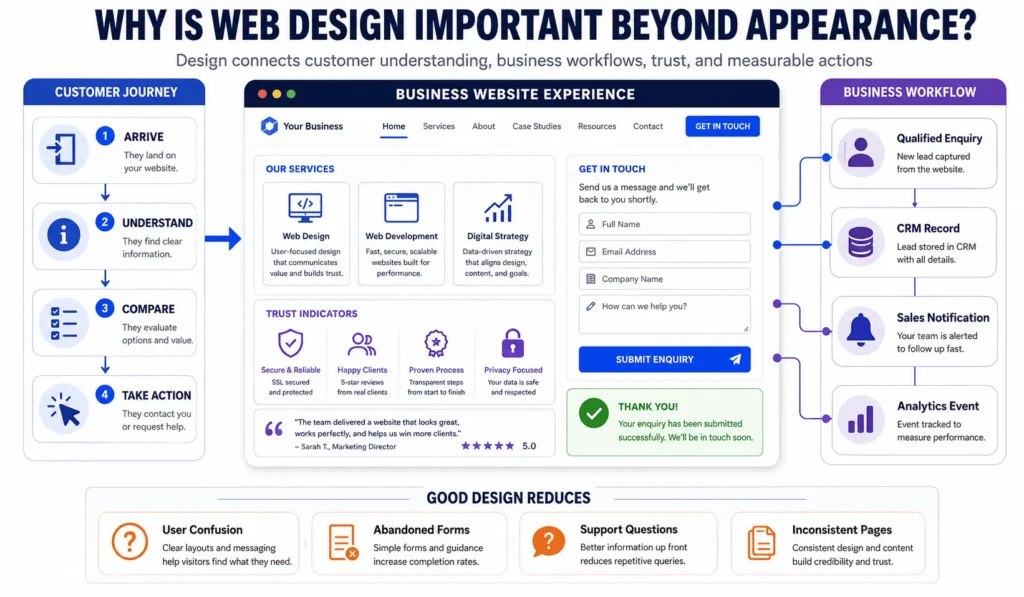
Web design is the system that turns business information into understandable actions. It decides what appears first, which choices are emphasized, how errors are explained, and whether users can complete a task without asking for help. That is why web design is important for both user experience and operational efficiency.
A strong visual hierarchy helps users distinguish primary actions from secondary information. Clear site navigation reduces decision fatigue. Consistent components create recognizable trust signals. Practical business website design principles also prevent teams from treating every new page as a separate creative project.
In production, weak design often appears as a support problem rather than a visual problem. Users submit duplicate forms because confirmation states are unclear. Sales teams receive incomplete enquiries because field requirements were not designed around qualification. Marketing creates pages that do not match the original layout because no reusable component system exists.
Why Is Web Design Important When Choosing DIY or Professional Delivery?
The right approach depends on risk, workflow complexity, internal capability, and expected growth. A DIY website builder can be sensible for a simple brochure site. An engineered website becomes more valuable when the platform handles lead routing, payments, customer accounts, integrations, multilingual content, or frequent publishing.
| Feature | DIY or Template-Based Site | Engineered Web Design |
|---|---|---|
| Initial launch | Usually faster for simple content | Requires discovery, design, and validation |
| Customization | Limited by templates and platform rules | Designed around business workflows and integrations |
| Performance control | Depends heavily on the provider | Can be optimized across code, media, cache, and infrastructure |
| Maintenance | Simple until exceptions accumulate | More structured, but requires disciplined ownership |
| Scalability | Suitable for predictable use cases | Better for changing content, roles, data, and automation |
The trade-off is honest: custom web design costs more and takes longer to deliver. When leaders ask, “why is web design important?”, the answer depends on risk and repeatability. Custom delivery can be over-engineered when the business has no validated demand, but it creates value when requirements justify reusable architecture, stronger quality control, and lower operational friction.
How Web Design Connects Frontend Experience to Architecture
Why is web design important to technical teams? Because interface decisions create backend work. A pricing calculator may require API calls. A booking flow may create database records, payment states, webhook events, and confirmation emails. A personalized dashboard may depend on authentication, role-based access control, caching, and real-time synchronization.
A typical production request moves through several layers. The browser loads assets from a CDN, sends a request to the application, validates input, reads or writes data, and may dispatch a queue job for slower work such as email, document generation, CRM synchronization, or analytics enrichment. The interface must communicate progress and failure without exposing internal complexity.
Why Is Web Design Important in Production Workflows?
In production, this fails when the design assumes every service responds instantly. APIs time out, payment webhooks arrive late, duplicate events occur, and third-party systems become unavailable. Good design includes loading states, validation, idempotent submissions, retry-safe actions, useful error messages, and fallback paths.
Monitoring also belongs in the design conversation. If teams cannot trace a failed enquiry from browser event to API log, queue worker, database record, and CRM response, the website is difficult to support. Observability, structured logging, and clear transaction states reduce the time spent diagnosing invisible failures.
Why Is Responsive Web Design Important for Revenue?
Responsive design is not simply shrinking desktop layouts. It changes hierarchy, spacing, navigation, interaction targets, forms, and content order for smaller screens. For local service businesses, mobile users often arrive with immediate intent, which is why regional pages such as a Hawaii web design company service must support fast comparison and simple contact paths.
Why is responsive web design important? Because a mobile-friendly website protects task completion when users have less screen space, slower connections, and less patience. A desktop menu that becomes an unclear mobile drawer, or a multi-column form that collapses badly, can reduce conversion rate even when the content is strong.
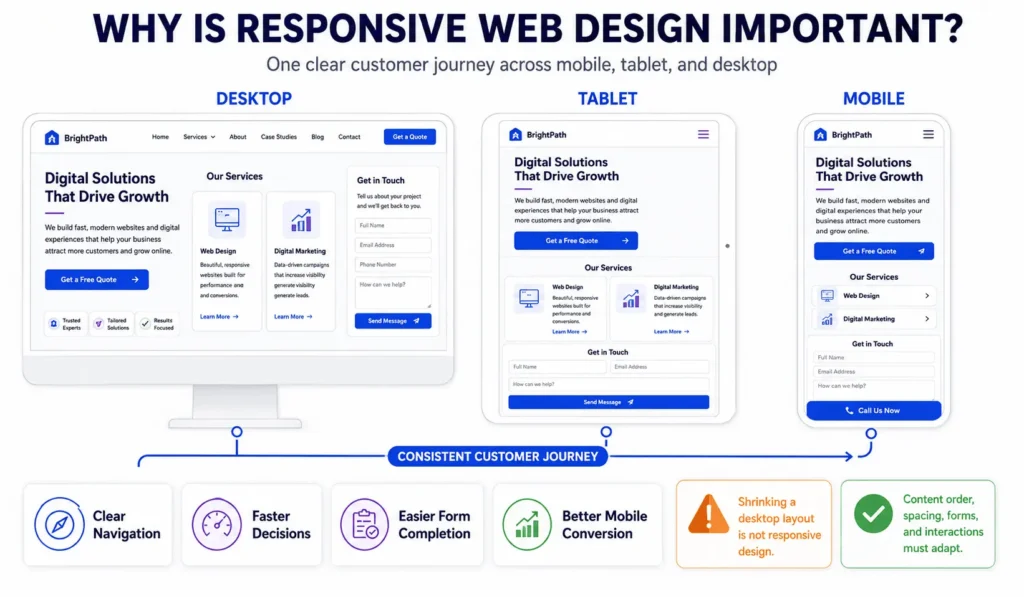
Responsive layouts should be tested with real content, not empty design placeholders. Long headings, validation errors, translated labels, keyboard focus, and dynamic pricing can all break a layout that looked correct in a static mockup.
Why Is Accessibility Important in Web Design?
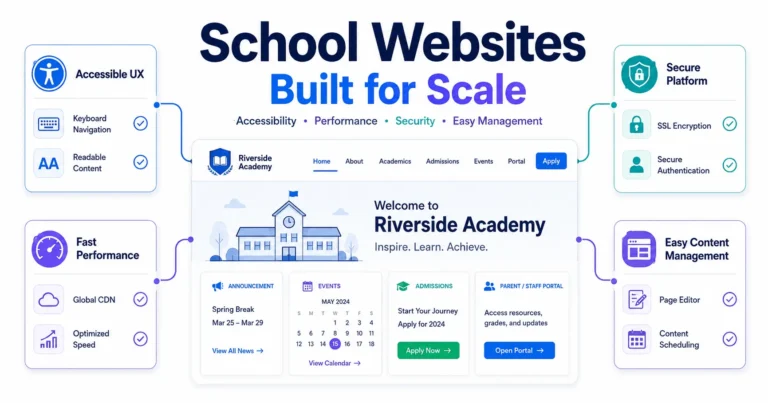
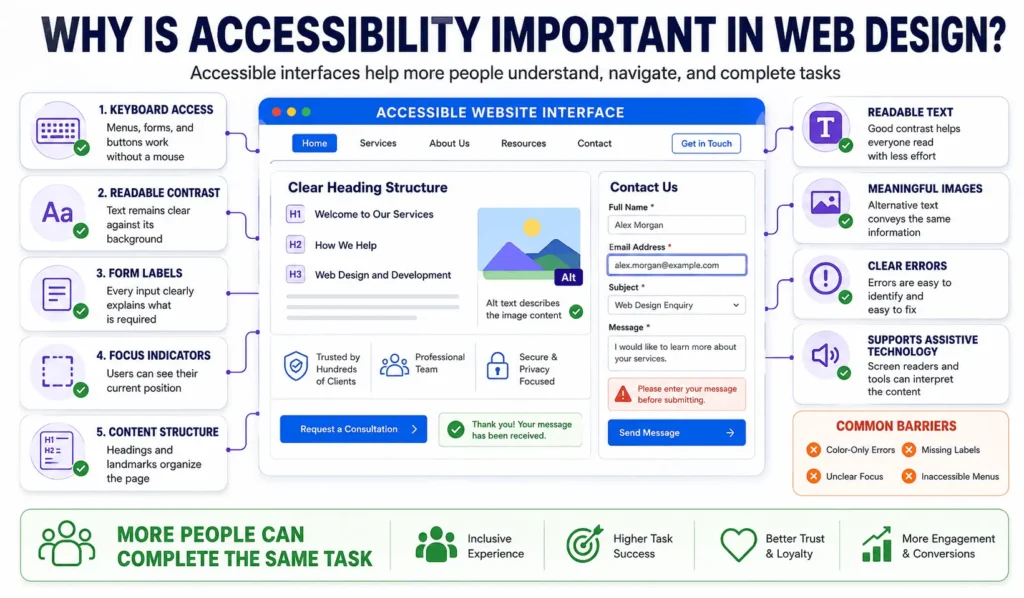
Website accessibility ensures that people can perceive, understand, navigate, and operate the interface using different devices and assistive technologies. The Web Content Accessibility Guidelines provide testable criteria for areas such as keyboard access, contrast, labels, focus behavior, and media alternatives.
Why is accessibility important in web design? Because inaccessible components create direct task failure. A form field without a programmatic label, a modal that traps keyboard focus, or an error shown only by color can block a user from completing an enquiry or purchase.
Accessibility is easier to maintain when built into the component system. Teams should define accessible buttons, headings, forms, alerts, menus, and dialogs once, then reuse them. A practical website accessibility checklist helps designers, developers, and content editors verify the same standards before release.
Performance, SEO, and Conversion Share the Same Constraints
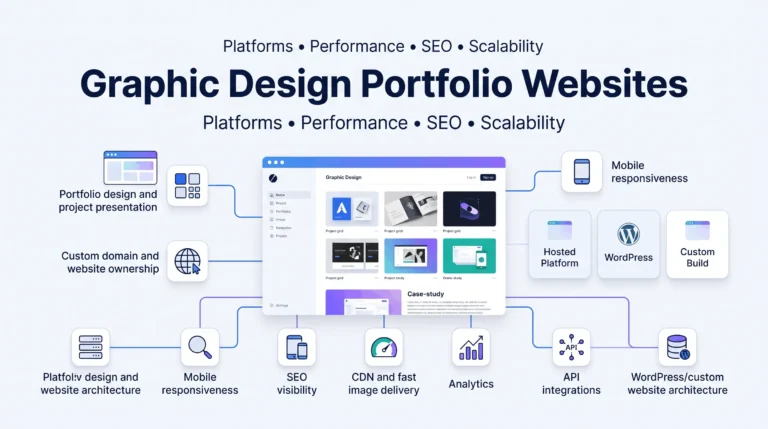
Why is web design important for search engine optimization? Search engines need crawlable structure, useful content, stable layouts, and reasonable performance. Users need the same things. Core Web Vitals are not a complete measure of quality, but they expose common issues such as delayed content, unstable layout, and slow interaction.
| Design Decision | Operational Risk | Better Production Approach |
|---|---|---|
| Large uncompressed hero media | Slow page load speed and higher bandwidth | Responsive images, modern formats, and CDN delivery |
| Too many third-party scripts | Main-thread blocking and inconsistent tracking | Script governance, consent logic, and deferred loading |
| Complex animations | Input delay and accessibility problems | Purposeful motion with reduced-motion support |
| Unstructured page builders | Markup bloat and inconsistent components | Reusable blocks with controlled design tokens |
| Weak form feedback | Duplicate submissions and abandoned leads | Clear validation, progress states, and idempotent processing |
Teams evaluating the question “why is web design important?” should compare measurable behavior, not screenshots. Performance work begins with page templates, analytics, tag managers, fonts, images, and plugins competing for the same browser resources. Removing one oversized script can create more value than weeks of visual refinement.
Architecture Choices Change What Web Design Can Support
A monolithic WordPress architecture is often the most maintainable choice for content-led websites because editing, rendering, permissions, and publishing remain in one system. Headless WordPress can improve frontend flexibility, but it adds API orchestration, preview complexity, deployment coordination, and cache invalidation work.
Microservices are justified when separate domains need independent scaling or ownership. They are not automatically more modern. A common mistake is splitting a website into services before the team has mature monitoring, deployment, authentication, and incident response practices.
Event-driven systems are useful for actions that should not block the user. After a purchase, for example, the application can record the transaction, return a confirmed state, and dispatch events for invoicing, CRM updates, analytics, and fulfillment. Queue retries and idempotency keys prevent duplicate side effects when a worker restarts.
WordPress and WooCommerce Design Must Account for Production Load
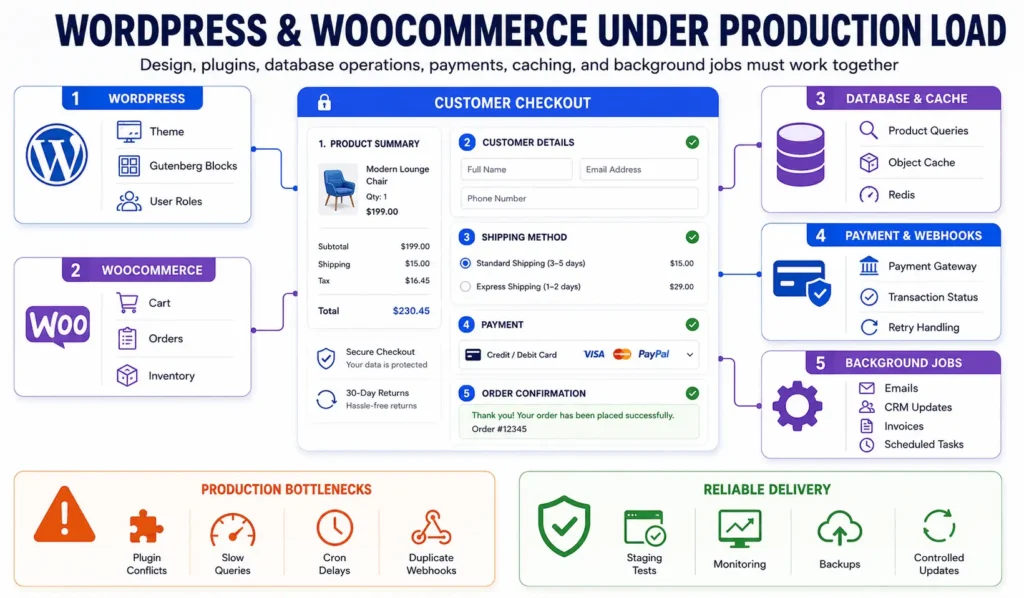
Why is web design important in WordPress projects? Because theme structure, plugin choices, Gutenberg blocks, and content models determine how safely the site can change. The question “why is web design important?” becomes practical when editors need flexibility without breaking typography, spacing, accessibility, or brand consistency.
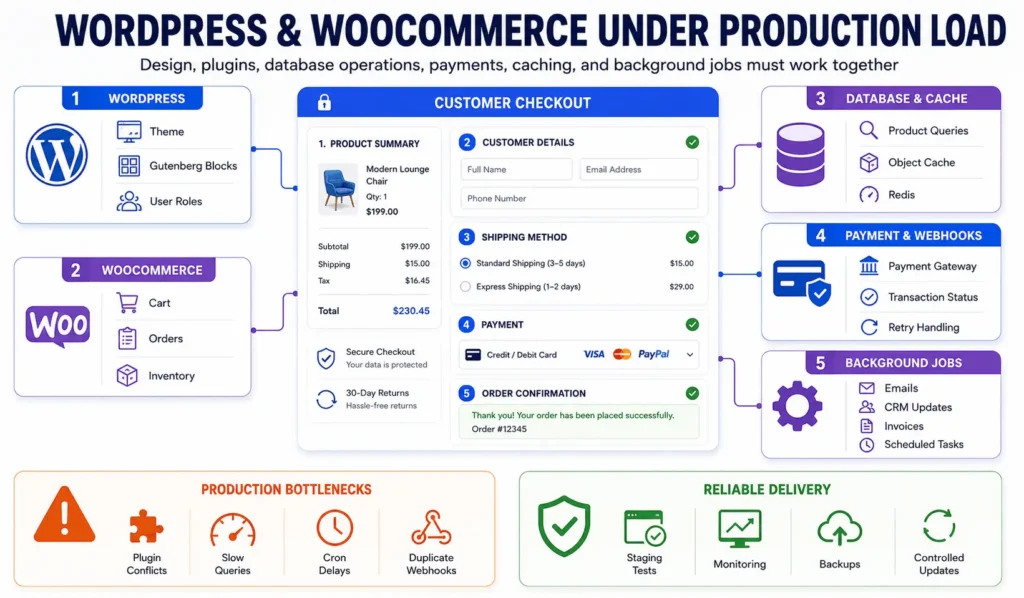
WooCommerce adds transactional pressure. Checkout pages depend on session state, inventory, taxes, shipping, payment gateways, and webhook reliability. Object caching with Redis can reduce repeated queries, but it does not fix inefficient plugins or poorly indexed database tables. WordPress cron is also request-driven by default, so critical background work may require a real server scheduler or managed queue.
Plugin conflicts are an operational reality. Updates should be tested in staging with representative orders, forms, user roles, and integrations. Security hardening also includes least-privilege access, protected admin routes, update discipline, backups, and monitoring rather than relying on a single security plugin.
Why Is Web Design Important for Scalability and Maintenance?
A practical way to explain “why is web design important?” for scalability is to look beyond traffic capacity. The platform must support new pages, products, languages, roles, campaigns, and integrations without multiplying risk. A maintainable design system defines reusable components, content rules, breakpoints, tokens, and interaction patterns.
For smaller teams, the best architecture is usually the simplest one that supports the next stage of growth. This is why small business website design should prioritize clear workflows and manageable publishing before advanced personalization.
Regional service pages also need consistency without duplication. A scalable approach can support different market messages, such as web design services in California, while preserving shared components, analytics, schema, and conversion tracking.
When Does Custom Web Design Become Necessary?
Custom development becomes reasonable when off-the-shelf tools create repeated manual work, data duplication, unreliable integrations, permission gaps, or reporting blind spots. The signal is not that a template looks ordinary. The signal is that the platform can no longer support the operating model.
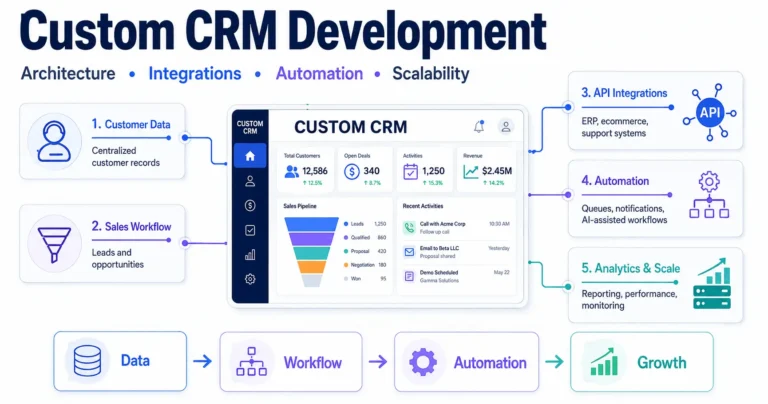
Filicode approaches web design through system architecture, WordPress and WooCommerce engineering, API integrations, SaaS development, AI automation, and performance optimization. That combination matters when a website must connect marketing pages with CRM workflows, customer accounts, payment systems, support automation, and internal admin tools.
The limitation is that engineered systems require ownership. Documentation, monitoring, testing, backups, and controlled releases remain necessary after launch. Custom code reduces platform constraints, but it does not remove maintenance responsibility.
Frequently Asked Questions
Why is web design important for a business?
Why is web design important for a business? It improves how customers understand the offer, complete tasks, and judge credibility. It also reduces operational friction by creating clearer forms, navigation, content structure, and conversion paths.
How much does professional web design cost?
Professional web design cost depends on page count, custom components, content work, integrations, accessibility, and testing. A small structured website may take a few weeks, while a transactional platform can require several months of design and engineering.
How long does a web design project take?
A focused marketing website commonly takes 4 to 10 weeks when content and approvals are available. Complex ecommerce, SaaS, or integration-heavy projects may take 3 to 6 months because architecture, testing, migration, and release planning add work.
Can a website scale without a redesign?
A website can scale without a full redesign when it uses reusable components, structured content, controlled design tokens, and stable APIs. Sites built as isolated pages usually require more rework because every change creates inconsistencies.
What integrations affect web design complexity?
CRM, payment, booking, identity, analytics, search, and support integrations affect interface states and failure handling. Each integration needs validation, authentication, timeout behavior, logging, retries, and a clear user-facing fallback.
What are the main migration risks?
The main migration risks are lost URLs, broken redirects, missing metadata, content formatting errors, tracking gaps, permission changes, and integration failures. A migration should include backups, URL mapping, staging tests, crawl checks, and rollback planning.
Why Is Web Design Important Before the Next Growth Stage?
Why is web design important at the point of growth? Because warning signs usually appear across operations: rising support questions, abandoned forms, slow releases, inconsistent pages, fragile plugins, failed integrations, and reporting that cannot explain where leads are lost.
Custom development should be considered when those constraints affect revenue, staff time, or customer trust. Start by mapping critical journeys, technical dependencies, failure states, ownership, and measurement. The goal is not a more elaborate website. It is a platform that remains clear, reliable, and maintainable as the business changes.