




Contents
- Quick Summary: What Decision-Makers Should Know
- What Are Web Design Services in California?
- Why Web Design Services in California Need More Than Visual Design
- Core Parts of Professional Web Design Services in California
- UX, Layout, and Conversion Flow
- Responsive and Mobile-Friendly Website Design
- SEO-Friendly Website Architecture
- How Web Design Services in California Work in Production
- WordPress, WooCommerce, SaaS, and Custom Platform Trade-Offs
- Affordable Web Design Services in California vs Maintainable Systems
- Technical Architecture Behind Scalable Web Design Services in California
- Common Bottlenecks That Hurt Website Growth
- Where Filicode Fits for Technical Website Projects
- FAQs About Web Design Services in California
- How much do web design services in california cost?
- Should I choose WordPress or a custom website platform?
- What makes a website scalable after launch?
- Can affordable web design services still be high quality?
- When should a business redesign its website?
- Conclusion: Choosing Web Design Services in California With the Right Priorities
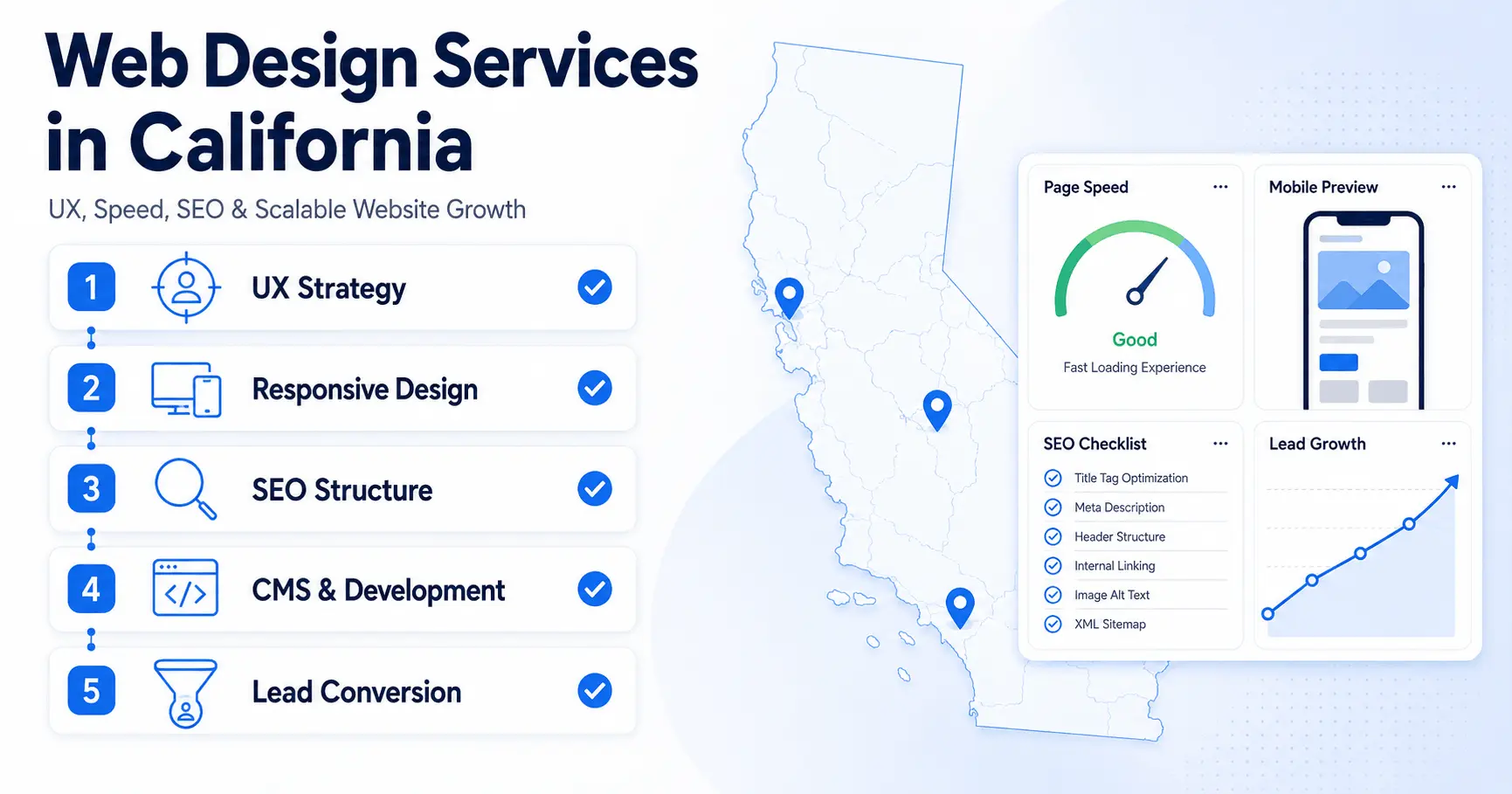
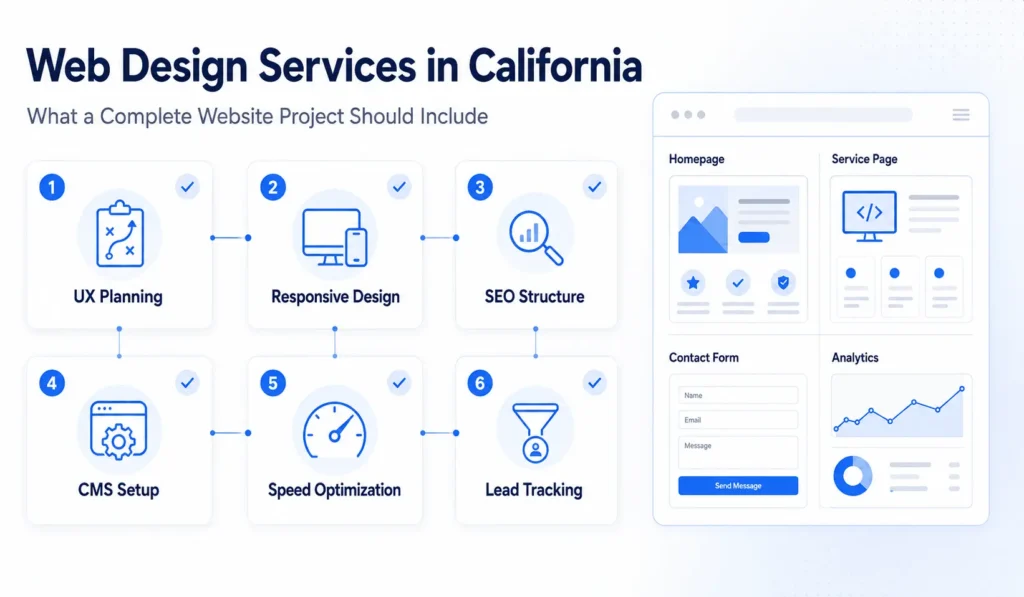
A website usually fails at the handoff points: design to development, marketing to tracking, CMS editing to quality control, and traffic to lead capture. Strong web design services in california should solve those operational gaps, not just produce polished screens. The work should cover UX, responsive layouts, page speed, content management, SEO structure, conversion paths, analytics, security, and maintainable code.
Quick Summary: What Decision-Makers Should Know
- Web design services in california should combine UX, engineering, SEO, and conversion strategy so the website can support growth after launch.
- A scalable website is built around reusable components, structured content, performance budgets, analytics visibility, and clean deployment workflows.
- Cheap design decisions often become expensive when the CMS is hard to edit, the site is slow, or every change requires developer intervention.
- WordPress, WooCommerce, SaaS platforms, and custom builds require different architecture decisions because their scaling risks are not the same.
- The best website projects reduce operational friction for marketing, sales, support, and leadership, not only for visitors.
What Are Web Design Services in California?
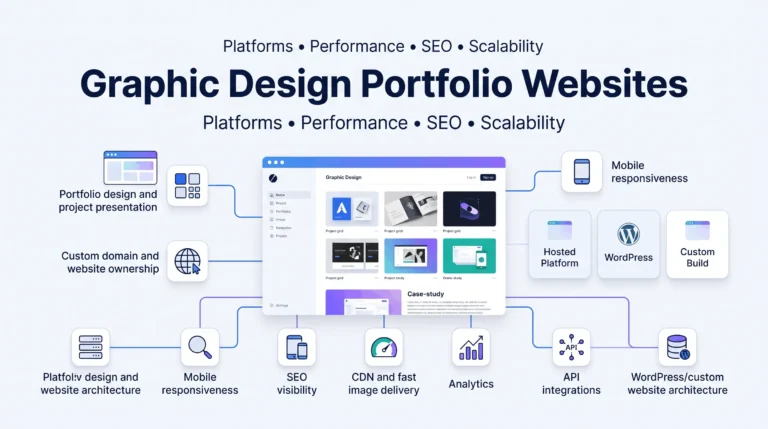
Web design services in california usually include planning, UX/UI design, responsive web design, frontend development, CMS setup, SEO-friendly page structure, performance optimization, analytics configuration, accessibility review, and post-launch support. For serious businesses, the service should also include technical architecture decisions that affect speed, maintenance, integrations, and future scalability.
Your main page for web design firms in California can target commercial buyers, while this supporting article explains what the service should include before hiring.
Why Web Design Services in California Need More Than Visual Design
California companies often operate in crowded markets: SaaS, ecommerce, fintech, healthcare, local services, agencies, marketplaces, and B2B platforms. A static brochure site may work for a small offline brand, but it will struggle when paid campaigns, SEO pages, product updates, CRM workflows, and analytics reporting become part of daily operations.
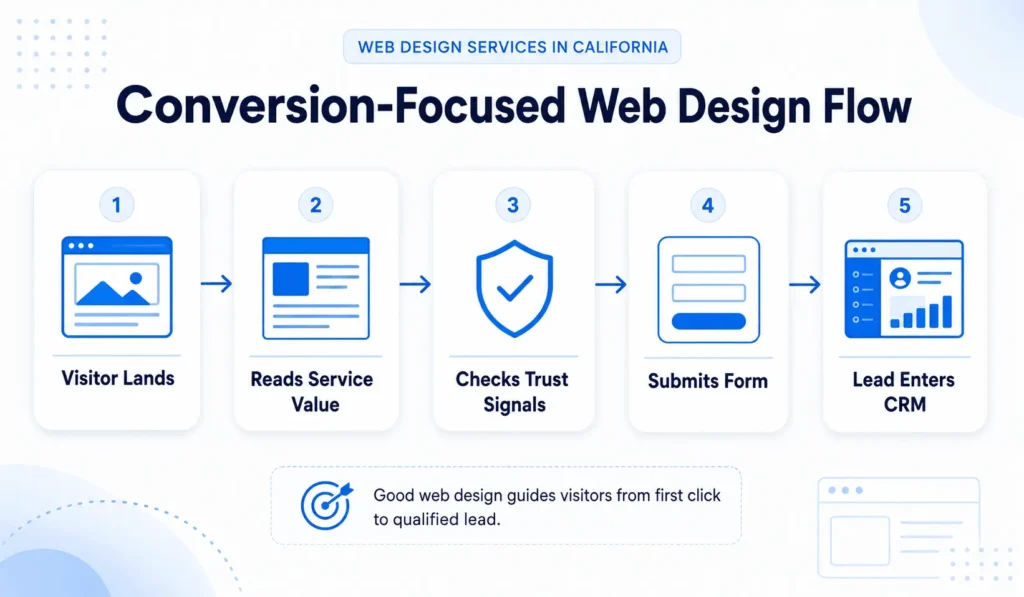
A professional website should handle the full workflow. A visitor lands on a fast page. The frontend renders cleanly on mobile. The call-to-action captures the lead. The backend validates the form. The CRM receives the data. Analytics records the conversion. The team can review source, campaign, page, and lead quality later.
That workflow sounds simple, but production sites fail in small places. Forms submit without tracking. Plugin updates break layouts. Page builders create bloated HTML. Images slow down mobile pages. Editors duplicate sections incorrectly. Developers add custom code without documentation. Over time, the website becomes expensive to change.
Core Parts of Professional Web Design Services in California
Good web design services in california start with business logic before visual direction. The team should understand your offer, sales cycle, buyer types, locations, technical constraints, content model, and operational workflows. Design decisions should support how the business actually sells and maintains the site.
UX, Layout, and Conversion Flow
UX/UI design is not decoration. It decides how users compare services, understand value, move through information, and take action. A lead generation website should make the next step obvious without hiding technical detail. A SaaS website may need feature pages, pricing logic, integrations, case studies, documentation, and trial flows.
For service companies, start with the buying path. Visitors usually want to know what you do, who you help, why you are credible, how the process works, and what happens after contact. This is why business website design strategy matters before typography, colors, or animations.
Responsive and Mobile-Friendly Website Design
Responsive web design should be tested on real breakpoints, not only resized in a browser. Navigation, forms, tables, sticky buttons, accordions, embedded videos, and comparison sections often behave differently on mobile. Poor spacing or slow scripts can reduce conversions even when the desktop page looks polished.
Mobile responsive design also affects technical SEO. Search engines crawl and evaluate mobile experiences heavily. A slow mobile page with layout shifts, oversized images, and poor internal linking will struggle even if the written content is good.
SEO-Friendly Website Architecture
SEO-friendly website design means more than adding keywords to headings. It includes clean URLs, crawlable navigation, structured headings, schema where useful, optimized internal links, indexable content, fast rendering, and logical page relationships. For local and state-level campaigns, location architecture should be planned carefully to avoid cannibalization.
A California web design company should know how a service page, supporting blog, comparison guide, and case study work together. Without that structure, a site may publish many pages but fail to build topical authority.
How Web Design Services in California Work in Production
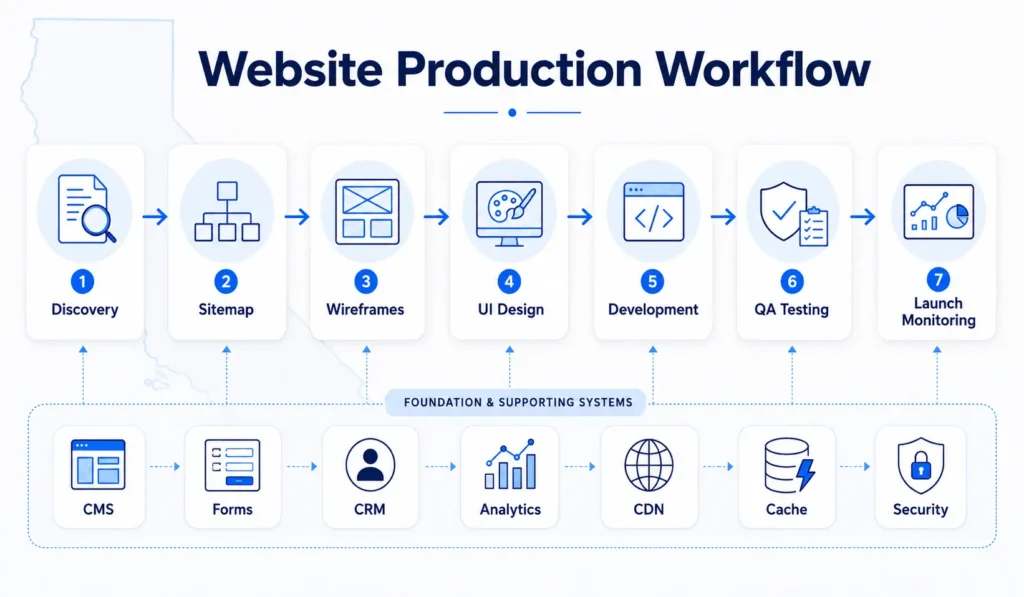
The production workflow behind web design services in california should be clear before a project starts. Many failed redesigns happen because the team approves visuals without mapping content, development dependencies, tracking, redirects, or CMS editing rules.
A practical build usually moves through discovery, sitemap planning, wireframes, content structure, UI design, frontend development, CMS integration, QA, analytics setup, deployment, and post-launch monitoring. Each stage should produce decisions that developers, editors, and stakeholders can actually use.
Reusable frontend components keep layouts consistent, while a structured CMS prevents messy content duplication. APIs should connect forms, CRM systems, booking tools, analytics, or automation platforms only where they improve the business workflow.
For higher-volume websites, async jobs and queues may handle form notifications, CRM syncs, file processing, invoice generation, or webhook retries. Caching and CDN architecture reduce server load. Monitoring helps teams catch broken forms, slow pages, failed API calls, and tracking issues before they affect revenue. The web performance fundamentals behind this work are not optional when the site supports acquisition.
WordPress, WooCommerce, SaaS, and Custom Platform Trade-Offs
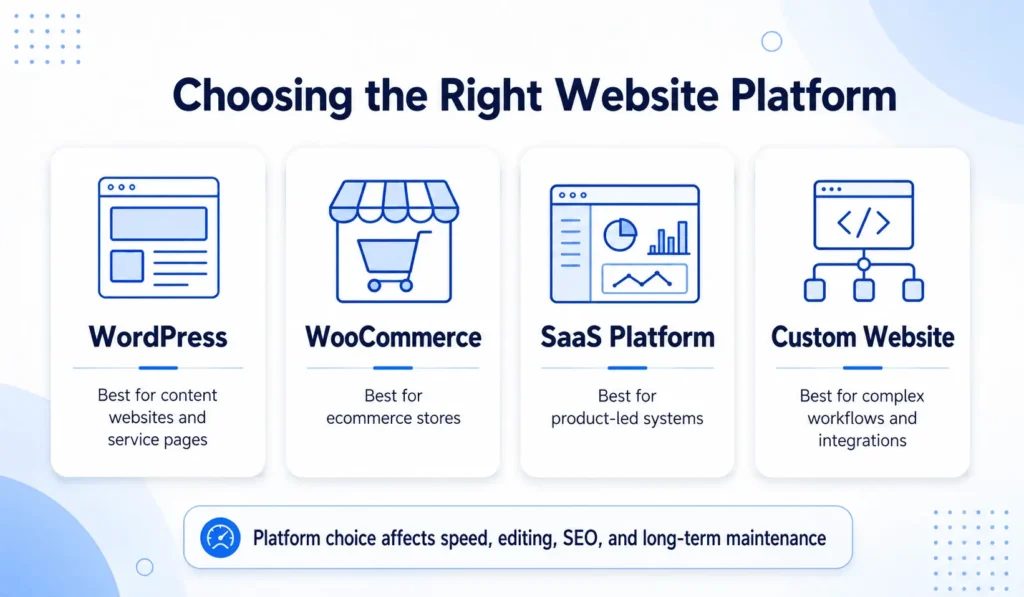
Not every website needs a custom platform. Not every website should rely on a page builder either. The right choice depends on how much content changes, how complex the workflows are, how many integrations exist, and how much control the team requires.
| Approach | Best Fit | Main Risk | Operational Reality |
|---|---|---|---|
| Template or no-code site | Simple brochure websites with limited updates | Limited flexibility and performance control | Fast to launch, but often harder to scale beyond basic pages |
| Custom WordPress website | Content-heavy service sites, blogs, landing pages, and marketing teams | Plugin conflicts and poor architecture if unmanaged | Strong option when Gutenberg blocks, custom fields, caching, and security are handled properly |
| WooCommerce website | Stores that need ecommerce control inside WordPress | Checkout speed, plugin bloat, and database load | Works well with optimized hosting, object caching, clean checkout logic, and careful extension selection |
| Headless or custom platform | SaaS, marketplaces, portals, and complex business workflows | Higher build cost and maintenance responsibility | Useful when APIs, multi-tenant logic, advanced permissions, or custom workflows are central to the business |
WordPress website design can be highly scalable when implemented correctly. Custom Gutenberg blocks, theme-level components, secure plugin architecture, REST API integrations, object caching, Redis, CDN optimization, and controlled deployment workflows can make WordPress practical for serious businesses. A weak implementation creates the opposite result: slow pages, editing problems, plugin conflicts, and fragile layouts.
If your site is already live but difficult to manage, a structured website redesign checklist can prevent SEO losses, broken redirects, missing analytics, and launch-day surprises.
Affordable Web Design Services in California vs Maintainable Systems
There is a real place for affordable web design services in california. Early-stage companies, local service providers, and small businesses may not need enterprise architecture. The problem starts when affordability is confused with rushed development, generic templates, no QA, no tracking, and no maintenance plan.
A smaller budget should still produce a clean content model, responsive layouts, basic SEO structure, secure forms, optimized images, and clear ownership of updates. A lower-cost website can be responsible. A careless website is not affordable if it blocks growth six months later.
| Decision | Cheap Build | Maintainable Build |
|---|---|---|
| Page structure | Pages copied from a generic layout | Pages mapped to search intent, conversion paths, and internal linking |
| CMS editing | Editors change raw layouts manually | Reusable sections protect design consistency |
| Performance | Large images, scripts, and page builder bloat | Compressed assets, caching, CDN usage, and performance testing |
| Integrations | Forms send emails only | CRM, analytics, validation, and fallback handling are planned |
| Maintenance | No update process or documentation | Plugin updates, backups, security, and monitoring are assigned |
For smaller companies, small business website design should prioritize clarity, speed, trust signals, local relevance, and easy editing. Those basics usually outperform complex visual effects that slow down the site.
Technical Architecture Behind Scalable Web Design Services in California
Scalable web design services in california require technical choices that support future change. A monolith can be perfectly reasonable for a marketing site or content-heavy WordPress build. Microservices may help when separate teams manage billing, authentication, inventory, reporting, or tenant-specific logic. The wrong architecture adds complexity without solving a real constraint.
For SaaS and marketplace websites, multi-tenant architecture becomes a deeper concern. Tenant isolation, subscription states, audit logging, admin tooling, webhook reliability, and reporting pipelines affect daily operations. A public website may be only one layer of the system, connected to dashboards, billing platforms, CRM tools, and internal automation.
Common Bottlenecks That Hurt Website Growth
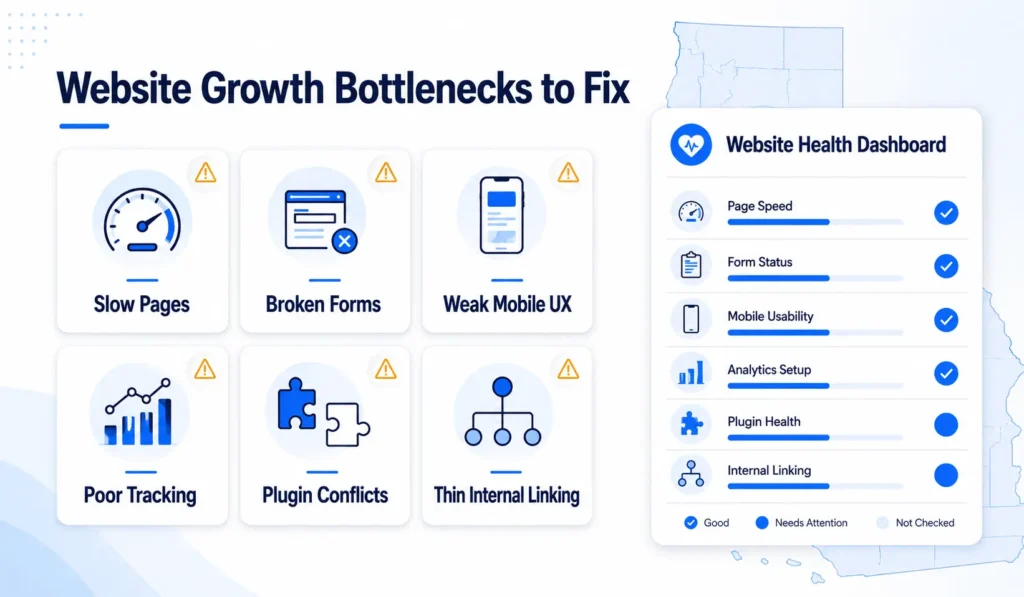
The most damaging website problems are usually operational, not visual. A company may have a good-looking site but still lose leads because the pages load slowly, forms fail silently, campaigns point to weak landing pages, or analytics cannot explain what is working.
Typical bottlenecks include plugin conflicts, broken redirects, duplicated service pages, slow database queries, weak cache rules, poor image handling, missing schema, thin internal linking, unclear ownership, and no staging workflow. These issues become worse when the business publishes more pages or starts paid acquisition.
This is where web design services in california should connect design with maintenance. Launch is not the finish line. After launch, teams still need security updates, speed checks, content improvements, conversion testing, monitoring, and technical SEO reviews.
Companies that are comparing providers should not only ask for portfolio examples. Ask how the web development agency handles staging, backups, rollback, tracking, schema, page speed, CMS training, plugin updates, QA, and support after launch.
Where Filicode Fits for Technical Website Projects
Filicode works on website projects where design, development, integrations, performance, and long-term maintainability need to stay connected.
Some companies need a clean marketing website. Others need a WordPress system with custom blocks, CRM routing, landing page templates, analytics, and performance controls. Some outgrow off-the-shelf tools and need custom workflows, admin panels, permissions, data synchronization, or integration layers.
When a company needs a technical build instead of a basic template, custom WordPress website development can reduce long-term maintenance friction. For teams comparing vendor options, an affordable website design company should still be judged by architecture discipline, not only price.
FAQs About Web Design Services in California
How much do web design services in california cost?
Web design services in california can cost anywhere from a smaller fixed project budget to a larger custom build depending on page count, UX depth, CMS requirements, integrations, content migration, ecommerce needs, performance work, and post-launch support.
Should I choose WordPress or a custom website platform?
WordPress is often the right choice for content-heavy marketing websites, service pages, blogs, and manageable ecommerce stores, while a custom platform is better when the business requires multi-tenant logic, advanced permissions, complex workflows, or deep product-specific functionality.
What makes a website scalable after launch?
A scalable website has reusable components, clean content structure, fast hosting, caching, CDN support, documented integrations, analytics visibility, secure update workflows, and a CMS setup that lets teams publish without breaking layouts.
Can affordable web design services still be high quality?
Affordable web design services can be high quality when the scope is controlled, the site architecture is clean, performance is tested, SEO basics are included, and the team avoids fragile shortcuts that create expensive maintenance problems later.
When should a business redesign its website?
A business should redesign its website when the current site is slow, difficult to edit, weak at converting leads, hard to integrate with tools, visually outdated, technically unstable, or limiting SEO and campaign performance.
Conclusion: Choosing Web Design Services in California With the Right Priorities
The best web design services in california are not limited to attractive layouts. They help the site perform as a working business system: fast pages, clear UX, clean CMS control, reliable forms, structured content, search visibility, analytics, and maintainable architecture.
Warning signs are easy to spot. Your team avoids updating pages because the CMS is fragile. Developers are needed for every minor change. Leads arrive without source tracking. Paid campaigns send traffic to slow pages. Plugins break after updates. Content expansion creates duplicate or competing pages.
When those problems appear, a basic redesign is rarely enough. The next step is to review the website as an operating system for marketing, sales, support, and growth. Filicode can help evaluate where the current setup is limiting performance and what kind of build would be practical to maintain over time.